
Bai Wei 白薇 — Chinese Herbal Medicine
Key Takeaways
- Nature: Cold | Taste: Bitter, Salty
- Category: resolve deficient heat
- Latin: Radix et Rhizoma Cynanchi Atrati
Bai Wei (白薇) At a Glance
- Herb: Bai Wei
- Chinese name: 白薇 (Bai Wei)
- Latin name: Radix et Rhizoma Cynanchi Atrati
- Nature: Cold
- Taste: Bitter, Salty
- Meridian: Lung
- Category: resolve deficient heat
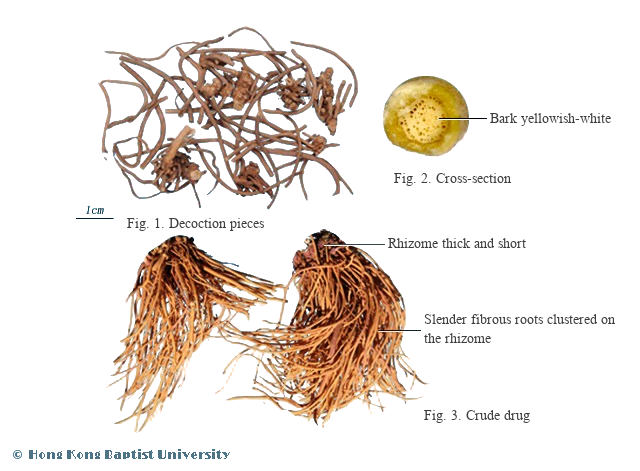
The name Bai Wei (白薇, “white subtlety”) reflects the herb’s pale, slender root and its penetrating ability to draw heat out from the yin level. First recorded in the Shen Nong Ben Cao Jing, it enters the Lung, Stomach, and Kidney meridians with a cold nature and bitter-salty taste. Its primary clinical role is cooling the low-grade, steaming fevers that linger after illness or childbirth — conditions where heat is rooted in yin vacuity rather than excess pathogen.
Actions & Therapeutic Effects
- Clears heat from deficiency — reduces tidal fever, night sweats, and steaming bone sensation arising from yin vacuity
- Cools the blood — addresses heat entering the blood level, calming reckless bleeding and persistent low-grade fever
- Promotes urination and relieves hot lin syndrome — clears damp-heat in the bladder with burning, scanty urination
- Resolves toxicity and reduces swelling — used internally and topically for toxic sores, snake bites, and swellings
- Clears Lung heat — descends Lung qi and relieves cough or wheezing driven by smouldering Lung fire
Clinical Applications in TCM
- Yin-deficiency steaming bone fever: paired with Di Gu Pi, Bie Jia, and Qing Hao (cf. Qing Gu San)
- Postpartum fever with blood deficiency: classic trio with Dang Gui and Ren Shen in Bai Wei Tang (Jin Gui Yao Lue)
- Hot lin syndrome with burning urination: combined with Mu Tong, Hua Shi, and Che Qian Zi
- Lung heat cough and wheezing: pairs with Sang Bai Pi and Huang Qin to clear smouldering Lung fire
- Blood-heat bleeding (epistaxis, haematuria): used alongside Ce Bai Ye and Sheng Di Huang
- Toxic swellings and snake bites: decocted internally or applied as a fresh paste with Zi Hua Di Ding
Precautions & Safety
- Dosage: 5–10 g in decoction; up to 15 g for severe deficiency-heat; may be used raw or honey-processed
- Contraindicated in Spleen-Stomach cold deficiency, cold-damp diarrhoea, or any pattern lacking heat signs
- Use with caution in pregnancy and in patients with low blood pressure, as the herb has mild hypotensive effects
Classical TCM Formulas
- Bai Wei San (白薇散): Bai Wei, Sheng Di Huang, Mu Dan Pi, Qing Hao — deficient-Heat with tidal fever and night sweats. Source: Wai Tai Mi Yao.
- Bai Wei Tang (白薇汤): Bai Wei, Dang Gui, Ren Shen, Gan Cao — postpartum deficient-Heat with fatigue and tidal fever. Source: Ben Shi Fang.
- Zhu Ye Shi Gao Tang (竹叶石膏汤) + Bai Wei: Zhu Ye, Shi Gao, Ban Xia, Mai Men Dong, Ren Shen, Gan Cao, Jing Mi + Bai Wei — residual Heat after febrile disease with Yin deficiency.
Herb Combinations
- Bai Wei (白薇) + Qing Hao (青蒿) + Di Gu Pi (地骨皮): the deficient-Heat clearing triad — clears bone-steaming Heat, tidal fever, and night sweats.
- Bai Wei (白薇) + Yu Zhu (玉竹) + Bai He (百合): clears deficient Heat while nourishing Yin for post-febrile fatigue and residual cough.
- Bai Wei (白薇) + Shi Gao (石膏) + Zhi Mu (知母): for fever with irritability — Bai Wei clears the Ying (Nutritive) level, Shi Gao clears the Qi level.
- Bai Wei (白薇) + Dang Gui (当归) + Gan Cao (甘草): for postpartum deficient-Heat with Blood deficiency and tidal fever.
Pharmacology & Research
Anti-inflammatory: C21 steroidal glycosides (cynatratoside A–C) inhibit NF-κB signalling, reducing IL-6 and TNF-α production.
Antipyretic: aqueous extract suppresses lipopolysaccharide-induced fever in animal models by modulating prostaglandin E2 synthesis.
Diuretic: phenolic acids and saponins increase glomerular filtration rate and inhibit renal tubular sodium reabsorption.
Antitumour: cynanchol and related steroidal alkaloids induce apoptosis in hepatocellular and cervical cancer cell lines in vitro.
Antimicrobial: ethanolic extract shows inhibitory activity against Staphylococcus aureus and Streptococcus pyogenes.
Classical Descriptions
- “Bai Wei governs violent wind and body heat, regulates the middle, and disperses accumulation of water.” — Shen Nong Ben Cao Jing (c. 1st–2nd century CE)