
Chuan Shan Jia 穿山甲 — Chinese Herbal Medicine
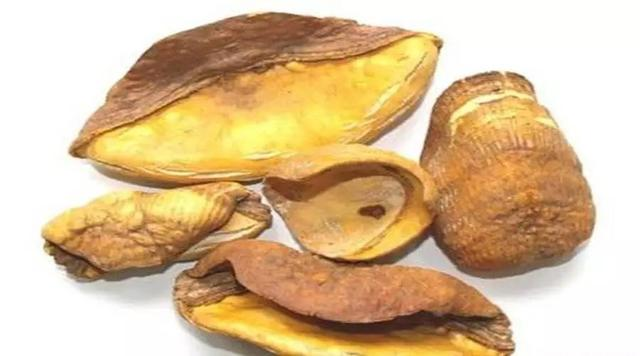
Key Takeaways
- Nature: Cool | Taste: Salty
- Category: Promotes blood circulation and eliminates masses
- Latin: Squama Manitis
Chuan Shan Jia (穿山甲) At a Glance
- Herb: Chuan Shan Jia
- Chinese name: 穿山甲 (Chuan Shan Jia)
- Latin name: Squama Manitis
- Nature: Cool
- Taste: Salty
- Meridian: Liver
- Category: Promotes blood circulation and eliminates masses
Chuan Shan Jia, the processed scales of the pangolin, is one of the most penetrating blood-activating substances in the classical TCM pharmacopeia. Its salty, cool nature allows it to enter deeply into the channels, breaking up stubborn stasis, softening masses, and unblocking the collaterals where milder herbs cannot reach. Historically prized for ripening and draining suppurating abscesses and restoring postpartum lactation, it occupies a unique position among herbs that move blood and resolve accumulations.
Actions & Therapeutic Effects
- Invigorates blood and dispels blood stasis
- Reduces swelling and drains pus from pre-suppurative abscesses
- Promotes lactation and unblocks the milk passages
- Softens hardness and dissipates nodules and masses
- Dispels wind-damp and unblocks the channels and collaterals
- Searches and penetrates deeply to reach stasis lodged in the bones and sinews
Clinical Applications in TCM
- Blood stasis amenorrhea or dysmenorrhea — paired with Ru Xiang, Mo Yao, and Dang Gui
- Pre-rupture abscesses and carbuncles — combined with Jin Yin Hua and Tian Hua Fen (Xian Fang Huo Ming Yin)
- Postpartum insufficient lactation — paired with Wang Bu Liu Xing (Tong Ru Dan)
- Scrofula and fibrocystic breast lumps — used with Zhe Bei Mu and Xuan Shen
- Wind-damp Bi syndrome with joint immobility and sinew contraction — combined with Du Huo and Wei Ling Xian
- Subcutaneous masses from stagnant phlegm-blood — with San Leng and E Zhu
Precautions & Safety
- Dosage: 3–10 g in decoction; 1–1.5 g as ground powder taken with warm water
- Strongly contraindicated in pregnancy — promotes strong movement and carries significant risk of miscarriage
- Use with caution in patients with bleeding tendencies or where no blood stasis pattern is present
- Not indicated for abscesses that have already ruptured or for yin-deficiency sores
- Conservation note: all Manis species are CITES Appendix I listed and were removed from the 2020 Chinese Pharmacopoeia; Wang Bu Liu Xing or pig-derived Squama Suidae are the accepted clinical substitutes
Classical TCM Formulas
- Tou Nong San (透脓散): Huang Qi, Zao Jiao Ci, Chuan Shan Jia (or substitute), Chuan Xiong, Dang Gui — expels pus. Source: Wai Ke Zheng Zong.
- Xia Ru Yong Quan San (下乳涌泉散): Chuan Shan Jia, Wang Bu Liu Xing, Dang Gui, Chuan Xiong — promotes lactation.
- MODERN ALTERNATIVE: Wang Bu Liu Xing 10-15g + Tong Cao 6g + Dang Gui 10g = equivalent lactogenesis without endangered species use.
Herb Combinations
- Chuan Shan Jia (穿山甲) + Wang Bu Liu Xing (王不留行): the lactogenesis pair — promotes lactation for postpartum milk insufficiency.
- Chuan Shan Jia (穿山甲) + Zao Jiao Ci (皂角刺): the pus-expelling pair for deep-seated abscesses that refuse to rupture.
- IMPORTANT: Chuan Shan Jia is from a critically endangered species with a total trade ban. Wang Bu Liu Xing alone, Zao Jiao Ci alone, or combined with Dang Gui and Tong Cao provide equivalent clinical results without conservation harm.
Pharmacology & Research
Keratin proteins & amino acids: primary structural components of the scale; anti-inflammatory activity demonstrated in animal models.
Cyclopentapeptides: exhibit anticoagulant and platelet-aggregation-inhibiting effects consistent with the TCM blood-activating function.
Stearic acid & cholesterol derivatives: contribute to lipid-modulating and membrane-stabilizing properties.
Zinc & trace minerals: present in clinically meaningful concentrations; support enzymatic and immune activity.
Trace alkaloids: associated with uterine-stimulating action, consistent with the strict contraindication during pregnancy.
Classical Descriptions
- “穿山甲,性善穿山,其氣直透,能引諸藥直達病所,通經下乳,消腫排膿。” — Ben Cao Gang Mu (本草綱目), Li Shizhen (李時珍), 1596 CE