
Dan Dou Chi 淡豆豉 — Chinese Herbal Medicine
Key Takeaways
- Nature: Cold | Taste: Acrid, Bitter, Sweet
- Category: Cool and pungent exterior-releasing
- Latin: Semen Sojae Praeparatum
Dan Dou Chi (淡豆豉) At a Glance
- Herb: Dan Dou Chi
- Chinese name: 淡豆豉 (Dan Dou Chi)
- Latin name: Semen Sojae Praeparatum
- Nature: Cold
- Taste: Acrid, Bitter, Sweet
- Meridian: Lung
- Category: Cool and pungent exterior-releasing
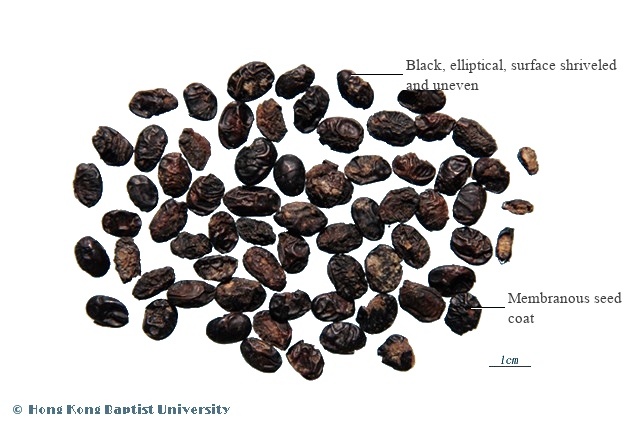
Dan Dou Chi (淡豆豉, Semen Sojae Praeparatum) is the fermented and processed seed of Glycine max (L.) Merr. (Fabaceae), the black soybean. The preparation is complex and pharmacologically significant: mature black soybeans are mixed with the aerial parts of Qing Hao (Artemisia annua) and Sang Ye (Morus alba leaf), steamed, and then fermented, during which they become coated with a fine white-grey mould. This fermentation transforms the cooling, nutrient-dense soybean into a light, aromatic, exterior-releasing medicinal with a unique dual capacity — when used alone or with Cong Bai, it releases Wind-Cold; when used with Zhi Zi and Bo He, it releases Wind-Heat. More importantly, Dan Dou Chi is prized for its ability to ‘relieve restlessness’ (除烦), addressing the vexation, agitation, and insomnia that accompany febrile diseases. Zhang Zhongjing’s Zhi Zi Chi Tang, pairing Dan Dou Chi with Zhi Zi, is the foundational formula for post-febrile restlessness and remains clinically relevant for post-infectious fatigue with anxiety and sleep disturbance.
Actions & Therapeutic Effects
- Releases the exterior — with unique dual-direction capability: releases Wind-Cold when combined with warming herbs (Cong Bai, Sheng Jiang), releases Wind-Heat when combined with cooling herbs (Bo He, Zhi Zi).
- Relieves restlessness and vexation (除烦) — treats the characteristic post-febrile agitation, insomnia, and chest oppression that follows externally-contracted febrile disease.
- Harmonises the Middle Jiao and awakens the Spleen — the fermentation-derived aromatic quality stimulates digestive function.
- Mildly resolves Dampness — slight Dampness-clearing action from the fermentation and herb-infusion process.
Clinical Applications in TCM
- Early-stage Wind-Cold with mild symptoms — Cong Chi Tang (Dan Dou Chi + Cong Bai)
- Wind-Heat exterior syndrome with fever and headache — Yin Qiao San includes Dan Dou Chi as an assistant exterior-releaser
- Post-febrile vexation, insomnia, and chest oppression — Zhi Zi Chi Tang (Dan Dou Chi + Zhi Zi)
- Residual heat after febrile disease with irritability and poor sleep — combined with Zhu Ye and Shi Gao
- Functional dyspepsia with epigastric fullness after illness — Dan Dou Chi decoction alone or with Chen Pi
- Menopausal hot flashes and irritability — used with Di Gu Pi and Bai Wei in modern protocols
Precautions & Safety
- Dosage: 6–15 g in decoction
- Contraindicated in Spleen deficiency with chronic diarrhea
- Caution in patients allergic to soy products
- Not interchangeable with unfermented black soybean (Hei Dou) — the fermentation creates the unique properties
- Dan Dou Chi prepared with Qing Hao/Sang Ye (the standard medicinal form) should be distinguished from the salty culinary Dou Chi used in cooking
Classical TCM Formulas
- Zhi Zi Chi Tang (栀子豉汤): Zhi Zi (14 pieces), Dan Dou Chi (4 he) — clears Heat and relieves vexation. Source: Shang Han Lun.
- Cong Chi Tang (葱豉汤): Cong Bai, Dan Dou Chi — releases the exterior for early-stage Wind-Cold. Source: Zhou Hou Bei Ji Fang.
- Yin Qiao San (银翘散): Jin Yin Hua, Lian Qiao, Jie Geng, Bo He, Niu Bang Zi, Dan Dou Chi, Dan Zhu Ye, Jing Jie, Gan Cao, Lu Gen — releases Wind-Heat exterior. Source: Wen Bing Tiao Bian.
Herb Combinations
- Dan Dou Chi + Cong Bai (葱白): the classical mild exterior-releasing pair for early-stage Wind-Cold. Source: Cong Chi Tang (Zhou Hou Bei Ji Fang).
- Dan Dou Chi + Zhi Zi (栀子): clears Heat and relieves vexation for post-febrile restlessness. Source: Zhi Zi Chi Tang (Shang Han Lun).
- Dan Dou Chi + Bo He (薄荷) + Lian Qiao (连翘): releases Wind-Heat exterior — core of Yin Qiao San. Source: Wen Bing Tiao Bian.
- Dan Dou Chi + Sheng Jiang (生姜) + Zi Su Ye (紫苏叶): releases Wind-Cold with Spleen-Stomach disharmony — for colds with nausea and poor appetite.
Pharmacology & Research
Mild diaphoretic: promotes gentle, sustained sweating without the harshness of Ma Huang — appropriate for weak patients or early-stage exterior patterns.
Sedative and anxiolytic: isoflavone glycosides (daidzin, genistin) demonstrate mild GABAergic activity; reduces stress-induced hyperthermia in animal models.
Antioxidant: fermentation increases the bioavailability of soybean isoflavones and generates new antioxidant peptides through proteolysis.
Phytoestrogenic: daidzein and genistein provide weak estrogen receptor modulation — relevant to traditional use in menopausal symptoms.
Gastrointestinal: fermented soybean products contain probiotics, digestive enzymes, and prebiotic oligosaccharides that support gut health.
Classical Descriptions
- 《名医别录》(Ming Yi Bie Lu, circa 500 CE): “豉,味苦,寒,无毒。主伤寒头痛寒热,瘴气恶毒,烦躁满闷,虚劳喘吸,两脚疼冷。” (Dou Chi: bitter, cold, non-toxic. Governs cold-damage headache with chills and fever, miasmic qi and malign toxin; vexation, agitation, fullness, and oppression; vacuity-taxation with panting; cold pain in both legs.)
- 《本草纲目》(Bencao Gangmu, 1596) — Li Shizhen: “黑豆性平,作豉则温。既经蒸罯,故能升能散。得葱则发汗,得盐则能吐,得酒则治风,得薤则治痢,得蒜则止血。” (Black soybean nature is balanced; made into Dou Chi it becomes warm. Having undergone steaming and fermentation, it can both ascend and disperse. With Cong [Bai] it promotes sweating; with salt it can induce vomiting; with wine it treats Wind; with Xie [Bai] it treats dysentery; with garlic it arrests bleeding.)
- 《本草备要》(Bencao Beiyao, 1694) — Wang Ang: “淡豆豉,苦甘寒。解肌发表,除烦。” (Dan Dou Chi: bitter-sweet, cold. Releases the muscle layer and exterior; relieves vexation.)