
Di Bie Chong 地鳖虫 — Chinese Herbal Medicine
Key Takeaways
- Nature: Cold | Taste: Salty
- Category: Promotes blood circulation and eliminates masses
- Latin: Eupolyphagae seu Steleophagaeque Corpus
Di Bie Chong (地鳖虫) At a Glance
- Herb: Di Bie Chong
- Chinese name: 地鳖虫 (Di Bie Chong)
- Latin name: Eupolyphagae seu Steleophagaeque Corpus
- Nature: Cold
- Taste: Salty
- Meridian: Liver
- Category: Promotes blood circulation and eliminates masses
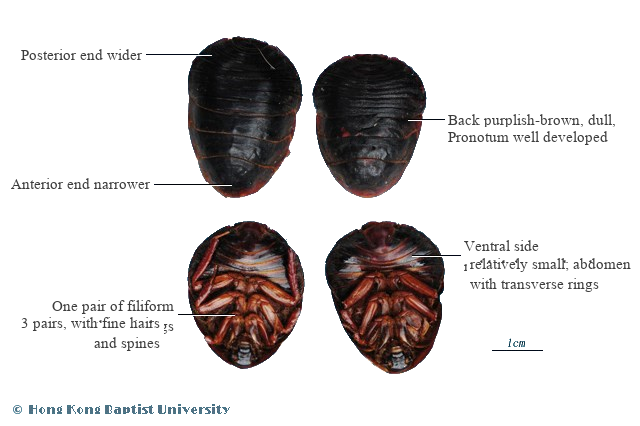
Di Bie Chong (地鳖虫), the dried body of the female ground beetle (*Eupolyphaga sinensis* or *Steleophaga plancyi*), is among the most forceful blood-moving medicinals in the TCM pharmacopoeia. Its cold, salty nature channels directly to the Liver, where it powerfully breaks static blood, disperses hard accumulations, and reunites fractured bone and severed sinew. It is a cornerstone herb in both gynecological blood-stasis formulas and classical traumatology prescriptions.
Actions & Therapeutic Effects
- Breaks blood stasis and unblocks menstruation
- Disperses abdominal masses and accumulations (zheng jia 癥瘕)
- Reconnects sinews and promotes fracture healing
- Transforms static blood in consumptive conditions (xu lao gan xue 虚劳干血)
Clinical Applications in TCM
- Blood-stasis amenorrhea or dysmenorrhea: combine with Tao Ren, Da Huang (Da Huang Zhe Chong Wan)
- Abdominal masses (zheng jia) with palpable hardness: combine with Shui Zhi, Meng Chong, Da Huang
- Traumatic fractures, bone pain, and sinew injuries: combine with Gu Sui Bu, Xu Duan, Zi Ran Tong
- Post-partum blood stasis with lower abdominal pain and lochia retention: pair with Tao Ren, Chuan Xiong, Pao Jiang
- Late-stage consumptive disease with dry blood obstructing the channels: Da Huang Zhe Chong Wan
- Stroke sequelae or bi syndrome from blood stasis: combine with Di Long, Chuan Xiong, Hong Hua
Precautions & Safety
- Dosage: 3–10 g in decoction; 1–1.5 g as powder or pills taken with warm water
- Contraindicated in pregnancy — strong blood-breaking action risks miscarriage
- Slight toxicity (xiao du 小毒); do not exceed recommended dose or use long-term without supervision
- Use with caution in patients with bleeding disorders or on anticoagulant therapy
- Avoid in cases of deficiency without blood stasis
Classical TCM Formulas
- Da Huang Zhe Chong Wan (大黄蟅虫丸) includes Di Bie Chong (listed as Zhe Chong): Da Huang, Huang Qin, Gan Cao, Tao Ren, Xing Ren, Bai Shao, Sheng Di Huang, Gan Qi, Meng Chong, Qi Cao, Shui Zhi, Di Bie Chong. Source: Jin Gui Yao Lue.
- Die Da Wan (跌打丸): Di Bie Chong, Ru Xiang, Mo Yao, Zi Ran Tong, Dang Gui — traumatic injury.
- Di Bie Chong is one of the most clinically used insect Blood-breakers.
Herb Combinations
- Di Bie Chong (地鳖虫) + Ru Xiang (乳香) + Mo Yao (没药) + Zi Ran Tong (自然铜): the traumatic injury quartet for fractures and soft tissue injury.
- Di Bie Chong (地鳖虫) + Da Huang (大黄) + Tao Ren (桃仁): breaks Blood stasis for traumatic ecchymosis and abdominal masses.
- Di Bie Chong (地鳖虫) + Shui Zhi (水蛭) + Meng Chong (虻虫): the three insect Blood-breakers — the strongest combination for severe Blood stasis.
Pharmacology & Research
Anticoagulant: fibrinolytic peptides inhibit platelet aggregation and prolong clotting time, supporting its blood-breaking action.
Osteogenic: promotes osteoblast proliferation and accelerates callus formation in fracture models.
Anti-tumor: cytotoxic alkaloids demonstrate activity against hepatocellular and cervical cancer cell lines in vitro.
Anti-inflammatory: reduces prostaglandin E2 synthesis, attenuating inflammation in soft-tissue injury models.
Cardioprotective: improves microcirculation and attenuates myocardial ischemia-reperfusion injury in animal studies.
Classical Descriptions
- “Zhe Chong masters heart and abdominal cold and heat, breaks accumulation and conglomeration, removes dead flesh and blood, and kills the three worms.” — *Shennong Bencao Jing* (神农本草经, c. 200 CE)