
Fu Ping 浮萍 — Chinese Herbal Medicine
Key Takeaways
- Nature: Cold | Taste: Acrid
- Category: Cool and pungent exterior-releasing
- Latin: Herba Spirodelae
Fu Ping (浮萍) At a Glance
- Herb: Fu Ping
- Chinese name: 浮萍 (Fu Ping)
- Latin name: Herba Spirodelae
- Nature: Cold
- Taste: Acrid
- Meridian: Lung
- Category: Cool and pungent exterior-releasing
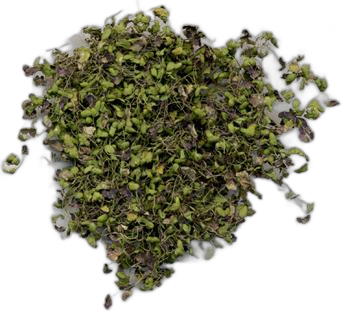
Fu Ping (浮萍, Herba Spirodelae) is the dried whole plant of Spirodela polyrrhiza (L.) Schleid. (Lemnaceae) — duckweed, the smallest flowering plant, a tiny aquatic herb that floats on the surface of still freshwater ponds, lakes, and rice paddies. Its name — ‘floating duckweed’ — and its nature are inseparable: a light, floating, water-born plant that treats conditions of the exterior and surface, particularly rashes and eruptions that should ‘float’ to the surface and express fully. Harvested in summer, the delicate green fronds with their tiny dangling rootlets are scooped from the water and sun-dried. Fu Ping is unique among exterior-releasing herbs in its dual action: it simultaneously vents rashes outward through the exterior and drains Dampness downward through urination — treating both the surface and the interior water pathways. Its acrid-cold nature makes it especially suited for Wind-Heat patterns, and its capacity to promote urination gives it a niche in treating oedema with exterior symptoms.
Actions & Therapeutic Effects
- Releases Wind-Heat and vents rashes (透疹) — promotes the full expression of eruptive febrile diseases (measles, scarlet fever) when the rash is incompletely expressed.
- Disperses Wind-Heat from the exterior — treats Wind-Heat exterior syndrome with fever, headache, and sore throat.
- Promotes urination and reduces oedema — mild diuretic action, unique among exterior-releasing herbs.
- Stops itching — treats Wind-Heat pruritic skin conditions including urticaria.
Clinical Applications in TCM
- Incomplete measles eruption with fever — combined with Bo He, Chan Tui, and Niu Bang Zi
- Wind-Heat common cold with sore throat and fever — paired with Jin Yin Hua and Lian Qiao
- Acute urticaria from Wind-Heat — used with Jing Jie, Fang Feng, and Di Fu Zi
- Oedema with exterior syndrome (风水肿) — Fu Ping as a single herb or combined with Fu Ling and Ze Xie
- Acute nephritis with oedema and hypertension — Fu Ping decoction as adjunctive therapy
- Pruritus and skin eruptions from Wind-Heat in the Blood — combined with Bai Xian Pi and Ku Shen
Precautions & Safety
- Dosage: 3–10 g in decoction (fresh: 10–30 g); 1–3 g as powder
- Contraindicated in exterior deficiency with spontaneous sweating — the diaphoretic action may worsen fluid loss
- Contraindicated in Blood deficiency with dry skin — the dispersing action may further dry
- Contraindicated at full rash expression — once the rash has fully emerged, the venting action is unnecessary
- Ensure collection from unpolluted water sources (duckweed readily absorbs heavy metals and waterborne contaminants)
- Identify correctly — do not confuse with Lemna minor (青萍), a related but distinct species
Classical TCM Formulas
- Fu Ping Wan (浮萍丸): Fu Ping as single herb honey pill — for Wind-Heat pruritus and urticaria. Source: Classical simple formula.
- Modified Xiao Feng San + Fu Ping: Jing Jie, Fang Feng, Niu Bang Zi, Chan Tui, Ku Shen, Cang Zhu, Shi Gao, Zhi Mu, Sheng Di Huang, Dang Gui, Tong Cao, Gan Cao + Fu Ping — acute urticaria and eczema from Wind-Heat-Dampness.
- Fu Ping Tang (浮萍汤): Fu Ping, Jin Yin Hua, Bo He, Chan Tui — for Wind-Heat exterior with sore throat.
Herb Combinations
- Fu Ping + Bo He (薄荷) + Chan Tui (蝉蜕): vents rashes and releases Wind-Heat — core triad for incomplete measles eruption. Source: Classical rash-venting formulas.
- Fu Ping + Jing Jie (荆芥) + Fang Feng (防风): disperses Wind and stops itching for acute urticaria. Source: Xiao Feng San variants.
- Fu Ping + Fu Ling (茯苓) + Ze Xie (泽泻): releases exterior and drains interior water for oedema with Wind-Heat exterior syndrome.
- Fu Ping + Jin Yin Hua (金银花) + Lian Qiao (连翘): clears Heat, releases exterior, and vents rashes for febrile eruptive diseases.
- Fu Ping + Ma Huang (麻黄): the floating water-plant paired with the dispersing ephedra — strong diaphoretic for severe Wind exterior with generalised oedema.
Pharmacology & Research
Antipyretic and diaphoretic: flavonoids and orientin promote cutaneous vasodilation and mild sweating; the antipyretic effect is comparable to low-dose aspirin in animal models.
Diuretic: high potassium content and flavonoids increase urine output and sodium excretion.
Antipruritic: orientin and vitexin stabilise mast cell membranes, reducing histamine release.
Antimicrobial: extracts demonstrate moderate activity against Staphylococcus aureus and Streptococcus pyogenes.
Antiviral: flavone C-glycosides show in vitro activity against influenza virus and respiratory syncytial virus (RSV).
Classical Descriptions
- 《神农本草经》(Shennong Bencao Jing, circa 200 CE): “水萍,味辛,寒。主暴热身痒,下水气,胜酒,长须发,止消渴。” (Water duckweed: acrid, cold. Governs sudden fever with body itching; drains water qi downward; overcomes alcohol; promotes beard and hair growth; stops wasting-thirst.)
- 《本草纲目》(Bencao Gangmu, 1596) — Li Shizhen: “浮萍,其性轻浮,入肺经,达皮肤,所以能发扬邪汗也。” (Fu Ping: its nature is light and floating; it enters the Lung channel and reaches the skin — therefore it can promote the expulsion of pathogenic sweat.)
- 《本草备要》(Bencao Beiyao, 1694) — Wang Ang: “浮萍,辛寒。入肺。发汗祛风,利水消肿。” (Fu Ping: acrid-cold. Enters the Lung. Promotes sweating and dispels Wind; promotes urination and reduces oedema.)