
Gan Song 甘松 — Chinese Herbal Medicine
Key Takeaways
- Nature: Warm | Taste: Acrid, Sweet
- Category: Regulate the qi
- Latin: Radix et Rhizoma Nardostachyos
Gan Song (甘松) At a Glance
- Herb: Gan Song
- Chinese name: 甘松 (Gan Song)
- Latin name: Radix et Rhizoma Nardostachyos
- Nature: Warm
- Taste: Acrid, Sweet
- Meridian: Spleen
- Category: Regulate the qi
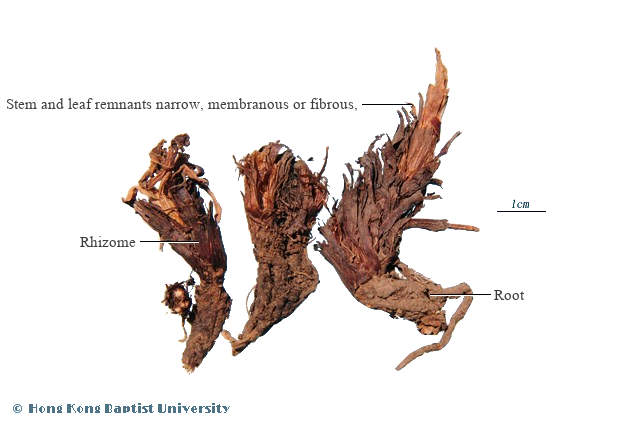
Gan Song (甘松, Radix et Rhizoma Nardostachyos) is the dried root and rhizome of Nardostachys jatamansi (D. Don) DC. (Valerianaceae), a high-altitude perennial herb native to the Himalayas and western China (Sichuan, Gansu, Qinghai, Tibet). The name ‘Gan Song’ — ‘sweet pine’ — evokes its intensely aromatic, sweet-woody fragrance reminiscent of both valerian and sandalwood. This perfume was the prized ‘spikenard’ (甘松香) of antiquity, worth its weight in frankincense, traded along the Silk Road, and described in the Bible as the costly ointment with which Mary anointed Jesus’s feet. In Chinese medicine, Gan Song is classified among the Qi-regulating herbs with the specific ability to awaken the Spleen (醒脾) through its aromatic quality — an action particularly valuable when emotional depression has caused Qi stagnation with loss of appetite. Its warm, sweet, acrid nature also treats Cold-pattern abdominal pain and, unusually, severe dental pain when applied directly to the affected tooth.
Actions & Therapeutic Effects
- Regulates Qi and awakens the Spleen (理气醒脾) — aromatic resuscitation of Spleen function in Qi stagnation with emotional depression, poor appetite, and epigastric fullness.
- Alleviates pain and disperses Cold — treats Cold abdominal pain, chest and epigastric pain from Qi and Cold obstruction.
- Opens the Heart and relieves emotional depression (解郁) — its extraordinary fragrance opens the sensory orifices, lifts the spirit, and treats Liver Qi depression with sadness and withdrawal.
- Stops toothache — crushed and applied directly to the painful tooth; an unusual and specific topical indication.
- Harmonises formulas — its rich aroma makes it a popular corrective (矫味剂) to mask unpleasant herb flavours in complex formulas.
Clinical Applications in TCM
- Spleen Qi depression with poor appetite, abdominal distension, and sadness — combined with Mu Xiang, Sha Ren, and Bai Zhu
- Epigastric and abdominal Cold-pain — paired with Gao Liang Jiang and Xiang Fu
- Functional dyspepsia with emotional trigger — used with Chai Hu, Bai Shao, and Chen Pi
- Hysterical depression with psychosomatic abdominal symptoms — combined with He Huan Pi and Yuan Zhi
- Dental caries pain — powdered Gan Song applied directly to the cavity for temporary relief
- Insomnia from Qi stagnation and emotional unrest — paired with Suan Zao Ren and Fu Shen
- Clinical adjunct to improve palatability of bitter formulas — small dose of Gan Song masks herbal bitterness with its sweet-woody aroma
Precautions & Safety
- Dosage: 3–6 g in decoction; 0.5–1.5 g as powder; add near end of decoction (aromatic)
- Contraindicated in Yin deficiency with Fire — the warm, aromatic nature may aggravate Heat patterns
- Caution in Qi deficiency without stagnation — excessive aromatic dispersal may deplete Qi
- Avoid overdose — large doses of the volatile oil may cause headache, nausea, and dizziness
- Not for long-term use — the strong aromatic quality makes it unsuitable for extended monotherapy
- The essential oil is strongly sedative at high doses — do not exceed recommended dosage
Classical TCM Formulas
- Gan Song Tang (甘松汤): Gan Song, Mu Xiang, Sha Ren, Bai Zhu, Chen Pi, Gan Cao — regulates Qi and awakens the Spleen for abdominal distension with poor appetite. Source: Classical Qi-regulating formula.
- Kai Yu Zhong (开郁种): Chai Hu, Xiang Fu, Bai Shao, Dang Gui, Bai Zhu, Fu Ling, Gan Song, Yuan Zhi, Zhi Gan Cao — opens Liver Qi depression and awakens the Spleen. Source: Modern formula adaptation.
- Valerianaceae calming formula: Gan Song, Suan Zao Ren, Fu Shen, Yuan Zhi, Bai Zi Ren, Dang Gui — for insomnia with Qi stagnation and emotional restlessness. Source: Integrative sedation formula.
Herb Combinations
- Gan Song + Mu Xiang (木香) + Sha Ren (砂仁): awakens the Spleen and regulates Qi for severe abdominal distension with loss of appetite. Source: Classical Spleen-awakening formulas.
- Gan Song + Chai Hu (柴胡) + Bai Shao (白芍) + Xiang Fu (香附): regulates Liver Qi, opens depression, and awakens the Spleen for emotional depression with digestive shutdown.
- Gan Song + Gao Liang Jiang (高良姜) + Xiang Fu (香附): warms the Middle and disperses Cold for epigastric Cold-pain. Source: Liang Fu Wan + Gan Song.
- Gan Song + He Huan Pi (合欢皮) + Yuan Zhi (远志): opens emotional depression and calms the spirit for psychosomatic abdominal symptoms with insomnia.
- Gan Song + Chen Pi (陈皮) + Fu Ling (茯苓): mild aromatic Spleen-awakening for Qi stagnation with Dampness.
Pharmacology & Research
Sedative and anxiolytic: jatamansone (valeranone) and other sesquiterpenes demonstrate GABAergic and serotonergic activity; prolongs pentobarbital-induced sleep and reduces anxiety behaviours in animal models comparable to low-dose diazepam.
Antidepressant: nardostachysin and jatamansin increase brain monoamine levels (serotonin, norepinephrine, dopamine) in chronic mild stress models; the mechanism parallels SSRI and MAOI activity.
Gastrointestinal prokinetic and carminative: volatile oil components relax gastrointestinal smooth muscle spasm while enhancing normal peristalsis.
Dental analgesic: direct application of the essential oil to exposed dentin produces rapid, localised analgesia via TRPV1 and sodium channel modulation.
Antimicrobial: moderate activity against oral pathogens (Streptococcus mutans, Porphyromonas gingivalis) — supports traditional use in dental infections.
Classical Descriptions
- 《开宝本草》(Kai Bao Ben Cao, 973 CE): “甘松香,味甘,温,无毒。主恶气,卒心腹痛满,下气。” (Gan Song Xiang: sweet, warm, non-toxic. Governs malign qi, sudden Heart-abdomen pain and fullness; descends Qi.)
- 《本草纲目》(Bencao Gangmu, 1596) — Li Shizhen: “甘松,芳香能开脾郁,少加入脾胃药中,甚醒脾气。” (Gan Song: its aromatic fragrance can open Spleen depression; when added in small amounts to Spleen-Stomach formulas, it greatly awakens Spleen qi.)
- 《本草备要》(Bencao Beiyao, 1694) — Wang Ang: “甘松,甘温芳香。理诸气,开脾郁。治心腹满痛,风疳齿龋。” (Gan Song: sweet-warm, aromatic. Regulates all qi; opens Spleen depression. Treats Heart-abdomen fullness and pain; wind-gan [gum disease] and dental caries.)