
Ge Hua 葛花 — Chinese Herbal Medicine
Key Takeaways
- Nature: Neutral | Taste: Sweet
- Category: Cool and pungent exterior-releasing
- Latin: Flos Puerariae Lobatae
Ge Hua (葛花) At a Glance
- Herb: Ge Hua
- Chinese name: 葛花 (Ge Hua)
- Latin name: Flos Puerariae Lobatae
- Nature: Neutral
- Taste: Sweet
- Meridian: Stomach
- Category: Cool and pungent exterior-releasing
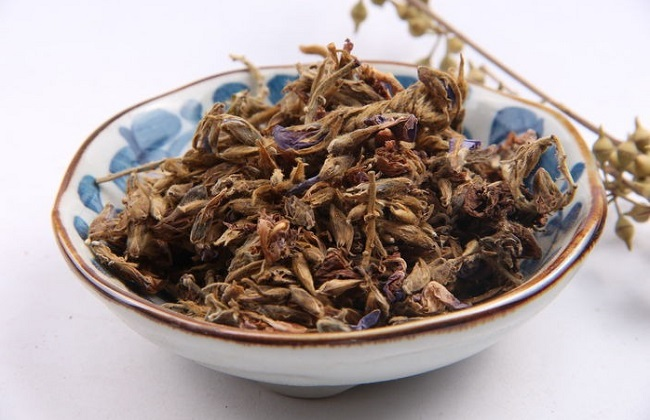
Ge Hua (葛花, Flos Puerariae Lobatae) is the dried flower of Pueraria lobata (Willd.) Ohwi (Fabaceae), better known as kudzu — the vigorous vine whose root (Ge Gen) is a major exterior-releasing herb. Harvested in late summer when the flowers are in full bloom, the purple-blue blossoms are dried whole. While Ge Gen releases the exterior and promotes fluid production, Ge Hua has an entirely different and highly specific clinical niche: it resolves alcohol toxicity (解酒毒), facilitates sobriety, protects the Spleen and Stomach from the damaging effects of alcohol, and prevents the hangover headache that follows heavy drinking. This is the classic TCM ‘hangover herb’ (醒酒药), recorded in the Ming dynasty and continuously used since. Modern research confirms its hepatoprotective properties and ability to accelerate alcohol metabolism through upregulation of alcohol dehydrogenase (ADH) and aldehyde dehydrogenase (ALDH). Li Shizhen wrote of it: ‘for those who have drunk too much wine and are poisoned, Ge Hua can resolve it — the flower of kudzu is the same as the root, but lighter and more ascending.’
Actions & Therapeutic Effects
- Resolves alcohol toxicity and promotes sobriety (解酒醒脾) — the defining action; accelerates alcohol clearance and reverses acute intoxication.
- Harmonises the Stomach and stops vomiting — treats nausea, vomiting, and epigastric discomfort from alcohol excess.
- Protects the Liver from alcohol-induced damage — hepatoprotective action preventing fatty liver and alcoholic hepatitis with chronic use.
- Alleviates hangover headache — treats the characteristic frontal and temporal headache of post-alcohol syndrome.
- Clears Damp-Heat from the Spleen and Stomach — milder secondary action for Damp-Heat gastrointestinal patterns.
Clinical Applications in TCM
- Acute alcohol intoxication and hangover — Ge Hua decoction (Ge Hua Jie Cheng Tang) before or after drinking
- Chronic alcoholism with Spleen-Stomach damage — combined with Bai Zhu, Fu Ling, and Chen Pi
- Nausea and vomiting from alcohol — paired with Sheng Jiang and Zhu Ru
- Headache from alcohol — combined with Chuan Xiong and Bai Zhi
- Alcoholic fatty liver — used with Dan Shen, Shan Zha, and Jue Ming Zi
- Alcoholic diarrhea — Ge Hua with Bai Zhu and Yi Yi Ren
- Prevention of alcohol toxicity — Ge Hua tea before social drinking (traditional prophylactic use)
Precautions & Safety
- Dosage: 3–12 g in decoction; 1.5–3 g as powder; can be steeped as tea
- Contraindicated in Spleen deficiency with chronic diarrhea — the slight descending action may worsen loose stools
- Generally safe with a long history of dietary and medicinal use
- The flower is not interchangeable with the root — Ge Gen releases the exterior, Ge Hua resolves alcohol toxicity
- Not a substitute for medical management of severe acute alcohol poisoning
- Optimal effect when taken before or shortly after drinking
Classical TCM Formulas
- Ge Hua Jie Cheng Tang (葛花解酲汤): Ge Hua, Mu Xiang, Chen Pi, Zhu Ling, Fu Ling, Ren Shen, Bai Zhu, Bai Dou Kou, Sha Ren, Shen Qu, Gan Jiang, Ze Xie, Qing Pi — resolves alcohol toxin, awakens the Spleen, and harmonises the Middle. Source: Pi Wei Lun (Li Dongyuan) / Dian Nan Bencao.
- Ge Hua San (葛花散): Ge Hua as single herb powder taken with warm water before or after drinking — simple alcohol prophylaxis and hangover treatment. Source: Folk tradition.
- Modified Ge Hua Tang for alcoholic liver: Ge Hua, Dan Shen, Ju Hua, Shan Zha, Jue Ming Zi, Ze Xie, Bai Zhu, Fu Ling, Chen Pi — clears Heat, protects the Liver, and resolves alcohol toxin.
Herb Combinations
- Ge Hua + Bai Zhu (白术) + Fu Ling (茯苓) + Chen Pi (陈皮): resolves alcohol toxin while protecting the Spleen-Stomach — the core of Ge Hua Jie Cheng Tang. Source: Dian Nan Bencao.
- Ge Hua + Sheng Jiang (生姜) + Zhu Ru (竹茹): harmonises the Stomach and stops vomiting from alcohol — the antiemetic pair for hangover nausea.
- Ge Hua + Dan Shen (丹参) + Shan Zha (山楂): protects the Liver and lowers lipids for alcoholic fatty liver disease.
- Ge Hua + Ju Hua (菊花) + Gou Qi Zi (枸杞子): clears and brightens for hangover headache and eye discomfort.
- Ge Hua + Lian Zi (莲子) + Shan Yao (山药): protects the Spleen for chronic alcoholism with Spleen deficiency and diarrhea.
Pharmacology & Research
Alcohol dehydrogenase (ADH) activation: puerarin and daidzin upregulate ADH, accelerating the first-pass metabolism of ethanol to acetaldehyde in the liver.
Aldehyde dehydrogenase (ALDH) activation: accelerates the conversion of toxic acetaldehyde to acetate, reducing blood acetaldehyde levels and hangover severity.
Hepatoprotective: puerarin and saponins reduce alcohol-induced ALT/AST elevation, steatosis, and oxidative stress markers in chronic alcohol administration models.
Gastroprotective: the flavonoid fraction reduces alcohol-induced gastric mucosal damage by enhancing prostaglandin synthesis and mucin secretion.
Blood alcohol-lowering: multiple human and animal studies confirm that Ge Hua extract administered before or during alcohol intake reduces peak blood alcohol concentration and accelerates clearance.
Antioxidant: isoflavones and saponins reduce alcohol-induced lipid peroxidation and glutathione depletion.
Classical Descriptions
- 《本草纲目》(Bencao Gangmu, 1596) — Li Shizhen: “葛花,气味甘平,无毒。主解酒毒。葛花同根,但根性轻扬,花性轻清,皆能散郁火。” (Ge Hua: sweet, balanced, non-toxic. Governs resolving alcohol toxin. Ge flower is the same as the root, but the root’s nature is light and rising, the flower’s nature is light and clear — both can disperse stagnant Fire.)
- 《本草备要》(Bencao Beiyao, 1694) — Wang Ang: “葛花,甘平。解酒毒。葛根轻扬升发,葛花轻清上行,皆入阳明。” (Ge Hua: sweet, balanced. Resolves alcohol toxin. Ge Gen is light, rising, and upward-dispersing; Ge Hua is light, clear, and upward-moving — both enter Yangming.)
- 《滇南本草》(Dian Nan Bencao, circa 1436) — Lan Mao: “葛花,解酒毒,醒脾和胃,止呕止渴。” (Ge Hua: resolves alcohol toxicity, awakens the Spleen and harmonises the Stomach, stops vomiting and quenches thirst.)