
Hei Zhi Ma 黑芝麻 — Chinese Herbal Medicine
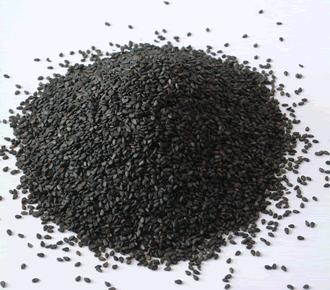
Key Takeaways
- Nature: Neutral | Taste: Sweet
- Category: Nourish KD LIV Yin
- Latin: Semen Sesami Nigrum
Hei Zhi Ma (黑芝麻) At a Glance
- Herb: Hei Zhi Ma
- Chinese name: 黑芝麻 (Hei Zhi Ma)
- Latin name: Semen Sesami Nigrum
- Nature: Neutral
- Taste: Sweet
- Meridian: Kidney
- Category: Nourish KD LIV Yin
Hei Zhi Ma, the black sesame seed, is a classic tonic herb and functional food that replenishes Kidney Jing and Liver Blood, making it especially valued for age-related or constitutionally rooted deficiency patterns. Its neutral nature and rich, moistening quality allow long-term use without generating Heat or dryness. It is equally at home in classical formulas and in the daily diet of patients requiring gentle, sustained nourishment.
Actions & Therapeutic Effects
- Nourishes Liver and Kidney Yin
- Replenishes Jing (Essence) and Blood
- Moistens the Intestines and unblocks bowels
- Strengthens sinews, bones, and lower back
- Darkens hair and arrests premature greying
- Calms internal Wind arising from Yin and Blood deficiency
Clinical Applications in TCM
- Liver-Kidney Yin deficiency with dizziness, tinnitus, blurred vision, and lower back weakness — combine with Gou Qi Zi, Shu Di Huang, and Sang Shen (as in Qi Bao Mei Ran Dan)
- Premature greying hair or hair loss from Kidney Jing and Liver Blood insufficiency — paired with He Shou Wu and Nu Zhen Zi
- Dry-type constipation in the elderly, postpartum, or blood-deficient patients — combined with Huo Ma Ren and Bai Zi Ren to moisten and lubricate the Large Intestine
- Deficiency Wind patterns with limb numbness or tremor in the context of Liver-Kidney insufficiency — used with Sang Ye and He Shou Wu
- Weakness of sinews and bones with knee and lumbar soreness — combined with Du Zhong and Sang Ji Sheng
- General Yin and Blood deficiency in chronic illness or post-febrile convalescence — added to food-grade tonics with Bai He and Long Yan Rou
Precautions & Safety
- Dosage: 9–15 g in decoction; 15–30 g in food-grade or paste preparations; often taken as a powder or with congee for long-term use
- Contraindicated in Spleen-Stomach deficiency with chronic loose stools or diarrhea; use with caution when Dampness, Phlegm, or Spleen Qi vacuity is pronounced, as the moistening nature may aggravate these conditions
Classical TCM Formulas
- Qi Bao Mei Ran Dan (七宝美髯丹): He Shou Wu, Hei Zhi Ma, Tu Si Zi, Niu Xi, Dang Gui, Gou Qi Zi, Bu Gu Zhi, Fu Ling — premature greying. Source: Yi Fang Ji Jie.
- Hei Zhi Ma Zhou (黑芝麻粥): Hei Zhi Ma congee — for chronic dry constipation.
- Sang Ma Wan (桑麻丸): Hei Zhi Ma + Sang Ye — nourishes Liver-Kidney and brightens eyes.
Herb Combinations
- Hei Zhi Ma (黑芝麻) + He Shou Wu (何首乌): the classic pair for premature greying — nourishes Liver-Kidney and darkens hair.
- Hei Zhi Ma (黑芝麻) + Sang Shen Zi (桑葚子) + Gou Qi Zi (枸杞子): nourishes Yin and Blood for dizziness and tinnitus.
- Hei Zhi Ma (黑芝麻) + Huo Ma Ren (火麻仁): the two seed oils together — strongly moistens intestines for dry constipation.
Pharmacology & Research
Fatty acids (oleic acid, linoleic acid): antioxidant activity, cardiovascular-protective, supports cell membrane integrity.
Lignans (sesamin, sesamolin): hepatoprotective, antioxidant, modulates lipid metabolism.
Tocopherols (Vitamin E): neuroprotective, free-radical scavenging, supports skin and hair follicle health.
Phytosterols: inhibits intestinal cholesterol absorption, mild lipid-lowering effect.
Minerals (calcium, iron, zinc, magnesium): supports bone density, haematopoiesis, and immune function.
Classical Descriptions
- Ben Cao Gang Mu (本草綱目, Li Shi-zhen, 1596): “Hei Zhi Ma tonifies the five Zang, benefits Qi and power, grows flesh and muscles… long-term use lightens the body, resists ageing, and increases wisdom.”