
Jie Chang Pu 节菖蒲 — Chinese Herbal Medicine
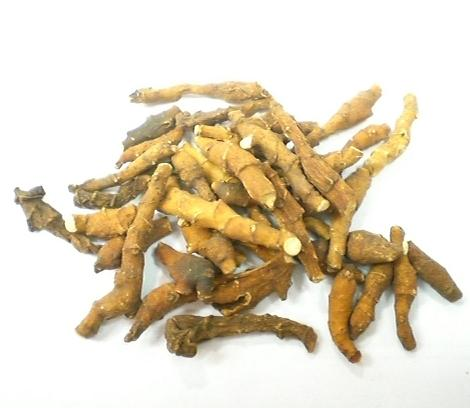
Key Takeaways
- Nature: Warm | Taste: Acrid
- Category: Awaken the mind and spirit
- Latin: Rhizoma Anemones Altaicae
Jie Chang Pu (节菖蒲) At a Glance
- Herb: Jie Chang Pu
- Chinese name: 节菖蒲 (Jie Chang Pu)
- Latin name: Rhizoma Anemones Altaicae
- Nature: Warm
- Taste: Acrid
- Meridian: Kidney
- Category: Awaken the mind and spirit
Jie Chang Pu is the rhizome of Anemone altaica, a warm and acrid herb that enters the Kidney meridian to rouse the spirit and clear phlegm obstruction from the orifices. Its penetrating nature makes it effective in both neurological and musculoskeletal conditions marked by cold and dampness. Compared to Shi Chang Pu, it acts more deeply on the Kidney and lower body while retaining the capacity to open the mind’s gateway.
Actions & Therapeutic Effects
- Opens the orifices and awakens the spirit
- Transforms phlegm and disperses dampness
- Warms the Kidney and strengthens yang
- Dispels wind-cold and alleviates pain
- Calms fright and steadies the mind
- Promotes circulation and unblocks the channels
Clinical Applications in TCM
- Phlegm-misting the heart orifices: loss of consciousness, mental clouding — use with Dan Nan Xing, Yu Jin, Zhu Li
- Epilepsy and recurrent seizures due to phlegm-wind — combine with Tian Ma, Quan Xie, Ban Xia (Di Tan Tang variation)
- Wind-cold-damp painful obstruction (bi syndrome) of the lower limbs — pair with Du Huo, Qiang Huo, Wei Ling Xian
- Kidney yang deficiency with cold-damp sinking — combine with Fu Zi, Rou Gui, Ba Ji Tian
- Post-stroke aphasia and mental dullness — use with Shi Chang Pu, Yuan Zhi, Fu Shen
- Fright palpitations and insomnia with phlegm-cold — pair with Yuan Zhi, Fu Shen, Long Gu
Precautions & Safety
- Dosage: 3–9 g in decoction; 1–3 g as powder; reduce dose when combined with other acrid-warm herbs
- Contraindicated in yin deficiency with heat signs, hyperactive yang, or excessive sweating without cold-damp pattern
- Use with caution in pregnancy; high doses may irritate the gastric mucosa
- Avoid prolonged use without tonifying support in patients with underlying Kidney yin deficiency
Classical TCM Formulas
- Kai Xin San (开心散): Yuan Zhi, Ren Shen, Fu Ling, Shi Chang Pu (or Jie Chang Pu) — opens the Heart orifices and calms the spirit. Source: Bei Ji Qian Jin Yao Fang.
- Di Tan Tang (涤痰汤): Ban Xia, Chen Pi, Fu Ling, Zhi Shi, Zhu Ru, Dan Nan Xing, Shi Chang Pu, Ren Shen, Gan Cao — transforms Phlegm and opens orifices. Source: Qi Xiao Liang Fang.
- Jie Chang Pu San (节菖蒲散): Jie Chang Pu + Yu Jin + Dan Nan Xing — for Phlegm-Heat epilepsy.
Herb Combinations
- Jie Chang Pu (节菖蒲) + Yuan Zhi (远志) + Fu Shen (茯神): opens the Heart orifices and calms the spirit for forgetfulness, palpitations, and insomnia. Source: Kai Xin San.
- Jie Chang Pu (节菖蒲) + Yu Jin (郁金) + Zhu Li (竹沥): transforms Phlegm-Heat misting the Heart for manic-depressive psychosis and epilepsy.
- Jie Chang Pu (节菖蒲) + Shi Chang Pu (石菖蒲): the two Chang Pu compared — Jie Chang Pu is cooler and more Phlegm-transforming; Shi Chang Pu is warmer and more orifice-opening.
Pharmacology & Research
Antimicrobial: Protoanemonin and anemonin exhibit broad-spectrum antibacterial and antifungal activity.
Anti-inflammatory: Saponin fractions suppress prostaglandin synthesis and reduce inflammatory edema.
Neuroprotective: Alkaloid constituents demonstrate mild CNS-modulating effects, supporting sedation and anticonvulsant action in animal models.
Analgesic: Demonstrates dose-dependent pain inhibition in hot-plate and writhing assays, consistent with channel-opening and bi-dispersing functions.
Circulatory: Mild vasodilatory effect on peripheral vessels, supporting its use in cold-damp obstruction patterns.
Classical Descriptions
- “菖蒲,味辛温,主风寒湿痹,咳逆上气,开心孔,补五脏,通九窍,明耳目,出声音。” — *Shen Nong Ben Cao Jing* (神农本草经), on the genus 菖蒲, noting its acrid-warm nature, capacity to open the heart orifices, unblock the nine orifices, and address wind-cold-damp obstruction — properties attributed across 菖蒲 varieties including 节菖蒲 in later commentaries.