
Mang Xiao 芒硝 — Chinese Herbal Medicine
Key Takeaways
- Nature: Cold | Taste: Bitter, Salty
- Category: Laxatives/Purgatives
- Latin: Natrii Sulfas
Mang Xiao (芒硝) At a Glance
- Herb: Mang Xiao
- Chinese name: 芒硝 (Mang Xiao)
- Latin name: Natrii Sulfas
- Nature: Cold
- Taste: Bitter, Salty
- Meridian: Lung
- Category: Laxatives/Purgatives
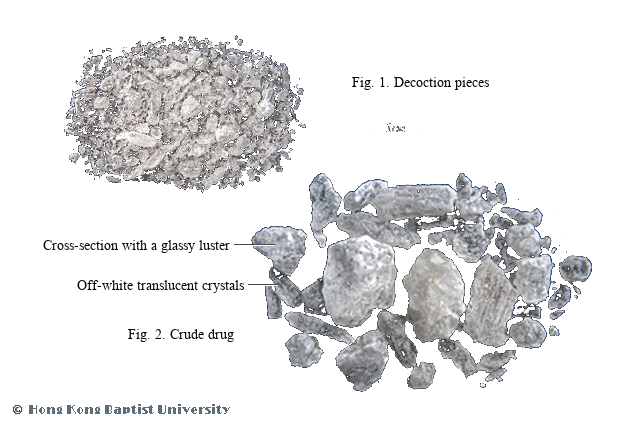
Mang Xiao — “awn saltpeter” — takes its name from the needle-like crystals that form on evaporation, resembling grain awns; it is hydrated sodium sulfate (mirabilite) and appears in Chinese materia medica as far back as the Shennong Bencao Jing. As a cold, heavily descending mineral substance, it uniquely combines the salty action of softening hardness with the bitter action of draining heat downward through the gut. Its primary clinical role is breaking up dry, heat-bound accumulations in the Stomach and Intestines, and it is equally employed topically for dispersing hot swellings and ulcerations of the throat and skin.
Actions & Therapeutic Effects
- Purges accumulation and drains heat — strongly moves bowels to clear heat-bound constipation with abdominal fullness and pain
- Softens hardness and moistens dryness — the salty flavour dissolves and softens dry stool, masses, and nodules
- Clears heat and dissipates swelling (topical) — applied externally reduces hot, inflamed swellings, abscesses, and ulcerations
- Clears Lung and descends fire — directs excess heat downward, relieving throat soreness and chest oppression linked to Lung heat
- Drains San Jiao fire — disperses heat accumulation across multiple burners when combined with bitter heat-clearing herbs
Clinical Applications in TCM
- Heat excess constipation with dry, hard stool, high fever, abdominal distension — combined with Da Huang and Zhi Shi in Da Cheng Qi Tang or Tiao Wei Cheng Qi Tang
- Milder heat accumulation requiring gentle purging — combined with Da Huang and Gan Cao in Tiao Wei Cheng Qi Tang
- Intestinal abscess (Chang Yong) — combined with Da Huang, Mu Dan Pi, and Tao Ren in Da Huang Mu Dan Tang
- Throat sore, mouth ulcers, red and swollen eyes — powdered Mang Xiao insufflated or gargled as solution (Bing Peng San variant)
- Breast abscess or mastitis — Mang Xiao dissolved and applied as a wet compress to disperse swelling and drain heat
- Pediatric food stagnation with heat — small doses dissolved in water clear accumulation without harsh catharsis
Precautions & Safety
- Dosage: 6–12 g dissolved in the strained decoction of other herbs or in warm water; never decocted directly as heat degrades the mineral; topical use as saturated solution or dry powder
- Contraindicated during pregnancy — strong descending action risks miscarriage
- Contraindicated in Spleen and Stomach cold deficiency with loose stools or absent heat signs
- Avoid in cases of yin deficiency without heat accumulation — excessive fluid loss may worsen dryness
- Use with caution alongside diuretics or medications sensitive to electrolyte shifts due to high sodium content
Classical TCM Formulas
- Da Cheng Qi Tang (大承气汤): Da Huang, Mang Xiao, Hou Po, Zhi Shi — the most powerful purgative formula for severe Yangming Fu-organ syndrome. Source: Shang Han Lun.
- Tiao Wei Cheng Qi Tang (调胃承气汤): Da Huang, Mang Xiao, Gan Cao — milder purgation with Stomach-harmonising Gan Cao. Source: Shang Han Lun.
- Xuan Ming Fen (玄明粉): the purified, dehydrated powder form — less drastic; used topically in eye drops for conjunctivitis and orally for mild constipation.
Herb Combinations
- Mang Xiao (芒硝) + Da Huang (大黄): the core purgative pair — Da Huang stimulates peristalsis, Mang Xiao provides osmotic fluid load; together produce rapid, complete evacuation. Source: Da Cheng Qi Tang (Shang Han Lun).
- Mang Xiao (芒硝) + Gan Cao (甘草): clears Heat, drains Fire, and moderates the purgation — for sore throat and oral ulcers from Stomach Fire. Source: Gan Cao Tang modification.
- Mang Xiao (芒硝) + Bing Pian (冰片) + Peng Sha (硼砂) (topical): compound powder for pharyngitis and tonsillitis — Mang Xiao draws out Heat through osmotic action.
- Mang Xiao (芒硝) + Ru Xiang (乳香) + Mo Yao (没药) (topical): reduces swelling and resolves masses for acute mastitis and abscess.
Pharmacology & Research
Osmotic laxative: sodium sulfate draws water osmotically into the intestinal lumen, increasing stool water content and stimulating peristaltic contraction within 1–3 hours of administration.
Anti-inflammatory (topical): magnesium sulfate co-constituent reduces interstitial oedema and suppresses localised neutrophil infiltration, supporting use in mastitis and soft-tissue swellings.
Antibacterial: saturated sodium sulfate solution creates high-osmolality environment that inhibits Staphylococcus aureus and Streptococcal growth on mucosal surfaces, consistent with classical throat and wound applications.
Electrolyte modulation: sulfate ion transiently acidifies colonic contents, altering microbial fermentation balance and reducing putrefactive metabolite load.
Classical Descriptions
- “Mang Xiao is acrid, bitter, and cold. It governs the hundred diseases, regulates the six organs, eliminates heat and stagnation, and breaks fixed accumulations.” — Shennong Bencao Jing (Divine Farmer’s Classic of Materia Medica, c. 200 CE)