
Mu Hu Die 木蝴蝶 — Chinese Herbal Medicine
Key Takeaways
- Nature: Cool | Taste: Bitter, Sweet
- Category: Others
- Latin: Oroxyli Semen
Mu Hu Die (木蝴蝶) At a Glance
- Herb: Mu Hu Die
- Chinese name: 木蝴蝶 (Mu Hu Die)
- Latin name: Oroxyli Semen
- Nature: Cool
- Taste: Bitter, Sweet
- Meridian: Lung
- Category: Others
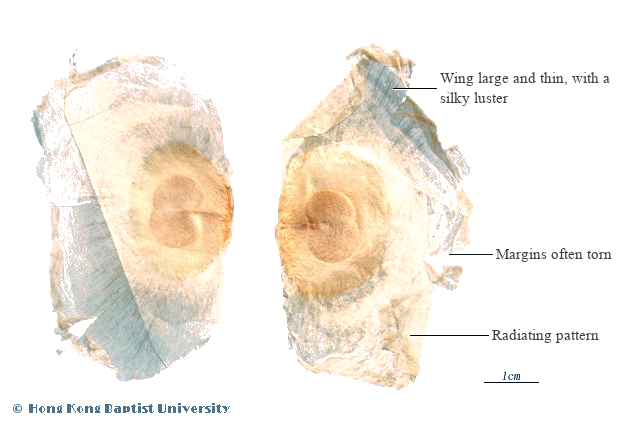
Mu Hu Die, “wooden butterfly,” takes its name from the translucent, papery-winged seeds of Oroxylum indicum that flutter like butterflies when released from their long sword-shaped pods. First documented systematically in the Qing-dynasty Bencao Gangmu Shiyi, the herb is prized in southern Chinese and Southeast Asian medicine for its elegant lightness — qualities that allow it to ascend to the Lung and Throat without the harshness of stronger heat-clearing agents. Its primary clinical role is resolving Lung-heat patterns manifesting as sore, inflamed throat, loss of voice, and dry or productive cough, while a secondary action on the Liver and Stomach makes it useful for stress-related epigastric discomfort.
Actions & Therapeutic Effects
- Clears Lung heat and relieves cough — disperses heat constraint in the Lung network, alleviating dry, irritating, or productive cough with yellow sputum.
- Soothes the throat and restores the voice — reduces inflammation and swelling of the pharynx and vocal cords; a leading herb for hoarseness and aphonia.
- Spreads Liver qi and harmonises the Stomach — gently moves stagnant Liver qi invading the Stomach, easing epigastric pain, distension, and acid reflux.
- Clears heat and promotes healing of sores — applied topically or taken internally to assist resolution of chronic skin ulcers and minor wounds.
Clinical Applications in TCM
- Acute or chronic pharyngitis with hoarseness or loss of voice: combine with Pang Da Hai (Sterculiae Lychnophorae Semen) and Gan Cao; often infused as a throat tea.
- Lung-heat cough with yellow sputum: pair with Sang Bai Pi, Huang Qin, and Zhi Mu to intensify heat-clearing and phlegm-resolving action.
- Chronic dry cough with Yin deficiency: use with Mai Dong and Sha Shen to moisten and descend Lung qi.
- Liver-Stomach disharmony — epigastric pain, bloating, hiccup: combine with Fo Shou and Xiang Yuan to move qi and relieve pain.
- Singer’s or teacher’s nodules / vocal fatigue: classical “voice tea” formula with Pang Da Hai, Luo Han Guo, and Gan Cao steeped in hot water.
- Topical application for slow-healing ulcers: powdered seed mixed with sesame oil and applied directly to the affected area.
Precautions & Safety
- Dosage: 1–3 g in decoction; may be steeped alone or in a simple throat tea; powder 0.5–1 g swallowed or applied topically; prolonged high-dose use is not recommended.
- Contraindications: avoid in Cold-pattern cough (clear watery sputum, cold limbs) or Spleen-Stomach deficiency-cold with loose stools; use cautiously during pregnancy owing to theoretical uterine-stimulating effects of flavonoid constituents.
- Notable interactions: may potentiate the effect of hepatically metabolised drugs (CYP450 modulation observed in vitro for chrysin and oroxylin A); monitor in patients on narrow-therapeutic-index medications.
Classical TCM Formulas
- Mu Hu Die Tang (木蝴蝶汤): Mu Hu Die, Pang Da Hai, Jie Geng, Gan Cao — acute pharyngitis and hoarseness. Source: Modern clinical formula.
- Li Yan Tang (利咽汤): Mu Hu Die, Jie Geng, Xuan Shen, Mai Men Dong, Gan Cao — chronic pharyngitis from Yin deficiency.
- Pang Da Hai Cha (胖大海茶) + Mu Hu Die: the two seeds steeped as tea — for loss of voice and acute pharyngitis.
Herb Combinations
- Mu Hu Die (木蝴蝶) + Jie Geng (桔梗) + Gan Cao (甘草): the sore-throat trio — Mu Hu Die soothes and coats, Jie Geng opens and directs to the throat, Gan Cao harmonises and clears Heat. Source: Classical throat formulas.
- Mu Hu Die (木蝴蝶) + Pang Da Hai (胖大海): the two mucilaginous seeds together — powerful soothing and demulcent action for acute pharyngitis and loss of voice.
- Mu Hu Die (木蝴蝶) + Chan Tui (蝉蜕) + Bo He (薄荷): clears Wind-Heat and benefits the throat for acute pharyngitis with hoarseness.
- Mu Hu Die (木蝴蝶) + Bai He (百合) + Mai Men Dong (麦门冬): nourishes Lung Yin and soothes the throat for chronic dry pharyngitis from Yin deficiency.
Pharmacology & Research
Anti-inflammatory: chrysin suppresses NF-κB and COX-2 signalling, reducing pharyngeal and bronchial mucosal inflammation.
Antitussive: oroxin A and oroxin B (flavonoid glycosides) attenuate citric-acid-induced cough reflex in animal models.
Antioxidant: baicalein and scutellarein scavenge ROS and upregulate Nrf2/HO-1 pathway, protecting respiratory epithelium from oxidative injury.
Antimicrobial: oroxylin A exhibits MIC activity against Streptococcus pyogenes and Staphylococcus aureus, supporting use in bacterial pharyngitis.
Gastroprotective: chrysin reduces gastric acid secretion and protects gastric mucosa via prostaglandin E₂ upregulation, consistent with the Liver-Stomach harmonising action.
Antitumour: oroxylin A inhibits HIF-1α-mediated glycolysis and induces apoptosis in lung carcinoma cell lines (in vitro).
Classical Descriptions
- “Its seeds are light as feathers and shaped like butterflies; it enters the Lung, clears heat, opens the throat, and stops cough — suited to those who speak or sing excessively.” — Bencao Gangmu Shiyi (本草纲目拾遗), Zhao Xuemin, Qing dynasty (c. 1765).