
Nan Sha Shen 南沙参 — Chinese Herbal Medicine
Key Takeaways
- Nature: Cool | Taste: Bitter, Sweet
- Category: Nourish lung yin and generate body fluids
- Latin: Radix Adenophorae
Nan Sha Shen (南沙参) At a Glance
- Herb: Nan Sha Shen
- Chinese name: 南沙参 (Nan Sha Shen)
- Latin name: Radix Adenophorae
- Nature: Cool
- Taste: Bitter, Sweet
- Meridian: Lung
- Category: Nourish lung yin and generate body fluids
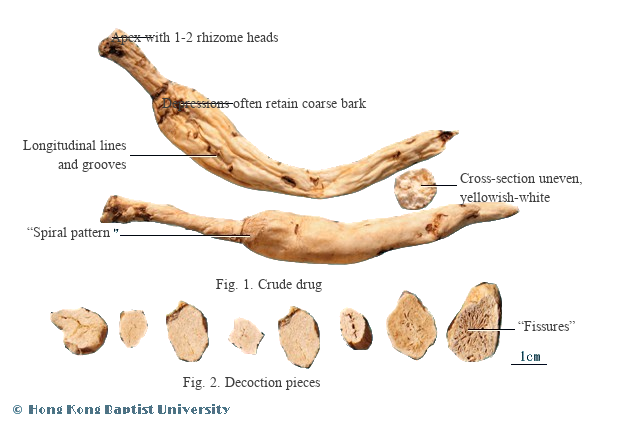
Nan Sha Shen, “Southern Sand Root,” takes its name from the pale, sand-textured root harvested from river banks and coastal provinces of southern China. Milder than its sibling Bei Sha Shen (北沙参) in yin-nourishing potency, it compensates with stronger phlegm-resolving action, making it particularly suited to lung-heat patterns where residual moisture has congealed alongside dryness. Clinically it anchors formulas addressing both lung and stomach yin depletion — a dual deficit common after febrile illness, prolonged dry-climate exposure, or overuse of warming, dispersing medicines.
Actions & Therapeutic Effects
- Nourishes Lung Yin — moistens lung dryness and restores yin fluids consumed by heat or chronic taxation cough.
- Clears Lung Heat — reduces inflammatory heat in the lung channel, relieving febrile or post-febrile dry, sore throat.
- Resolves Phlegm — loosens and expels stubborn phlegm associated with yin deficiency or residual pathogenic heat.
- Nourishes Stomach Yin — replenishes gastric fluids, relieving thirst, dry mouth, and poor appetite from stomach dryness.
- Generates Body Fluids — promotes systemic fluid production to support convalescence from fluid-consuming illness.
- Clears Deficiency Heat — mildly cools vacuity heat arising from lung or stomach yin depletion.
Clinical Applications in TCM
- Lung yin deficiency with dry, persistent cough or blood-streaked sputum — combine with Mai Men Dong (麦门冬) and Yu Zhu (玉竹) as in Sha Shen Mai Dong Tang (沙参麦冬汤).
- Post-febrile fluid damage with lingering cough and hoarse voice — pair with Sang Ye (桑叶) and Chuan Bei Mu (川贝母) to clear residual heat and resolve phlegm.
- Stomach yin deficiency with dry mouth, thirst, and scanty or peeled tongue coating — combine with Shi Hu (石斛) and Mai Men Dong in a light decoction.
- Chronic bronchitis or tuberculosis sequelae with yin-vacuity cough — integrate into long-course formulas alongside Bai He (百合) and Di Gu Pi (地骨皮).
- Hoarseness and dry throat from vocal overuse — decoct with Pang Da Hai (胖大海) and Jie Geng (桔梗) to moisten and open the throat.
- Convalescent fluid depletion after febrile illness — light doses in simple 2–3 herb preparations to restore fluids gently without cloying.
Precautions & Safety
- Dosage: 9–15 g dried root in decoction (up to 30 g fresh); simmer 20–30 minutes; compatible with honey preparations and congees for milder, sustained use.
- Contraindicated in cold-phlegm cough (thin, pale sputum; cold limbs) and in lung qi deficiency-cold patterns — its cool nature exacerbates cold stagnation.
- Incompatible with Li Lu (藜芦, Veratrum spp.) per the classical Eighteen Incompatibilities (十八反); strictly avoid concurrent use.
Classical TCM Formulas
- Sha Shen Mai Dong Tang (沙参麦冬汤) uses both Sha Shen varieties: Nan Sha Shen (for Phlegm transformation) + Mai Men Dong + Yu Zhu + Sang Ye. Source: Wen Bing Tiao Bian.
- Nan Sha Shen Tang (南沙参汤): Nan Sha Shen + Xing Ren + Qian Hu + Jie Geng — dry cough with sticky Phlegm.
- Yang Yin Qing Fei Tang (养阴清肺汤) with Nan Sha Shen: for the combination of Yin deficiency and Phlegm-Heat in the Lung.
Herb Combinations
- Nan Sha Shen (南沙参) + Xing Ren (杏仁) + Jie Geng (桔梗): clears the Lung, transforms Phlegm, and stops cough for dry cough with sticky sputum.
- Nan Sha Shen (南沙参) + Mai Men Dong (麦门冬) + Yu Zhu (玉竹): nourishes Lung Yin with Phlegm-transformation — for the combination of Yin-deficiency dryness and residual Phlegm.
- Nan Sha Shen (南沙参) + Bei Sha Shen (北沙参): Nan Sha Shen transforms Phlegm, Bei Sha Shen nourishes Yin — complementary action.
Pharmacology & Research
Triterpenoid saponins (adenophorasaponins A–D): expectorant action, loosening airway secretions and facilitating mucociliary clearance.
Polysaccharides: stimulate macrophage phagocytosis and support non-specific immune defense, relevant to chronic lung conditions.
Inulin-type fructans: prebiotic effect supporting intestinal and gastric mucosal integrity, underpinning stomach yin actions.
Beta-sitosterol and phytosterols: anti-inflammatory activity at mucosal surfaces, contributing to lung and throat tissue repair.
Classical Descriptions
- “沙參味甘,消腫排膿,補肝益肺,退熱除風。” — Yao Xing Fu (藥性賦, Song–Yuan era): “Sha Shen is sweet in flavour; it disperses swelling and expels pus, supplements the liver and benefits the lung, clears heat and expels wind.”