
Qian Niu Zi 牵牛子 — Chinese Herbal Medicine
Key Takeaways
- Nature: Cold | Taste: Acrid, Bitter
- Category: strong purgatives and diuretics
- Latin: Semen Pharbitidis
Qian Niu Zi (牵牛子) At a Glance
- Herb: Qian Niu Zi
- Chinese name: 牵牛子 (Qian Niu Zi)
- Latin name: Semen Pharbitidis
- Nature: Cold
- Taste: Acrid, Bitter
- Meridian: Lung
- Category: strong purgatives and diuretics
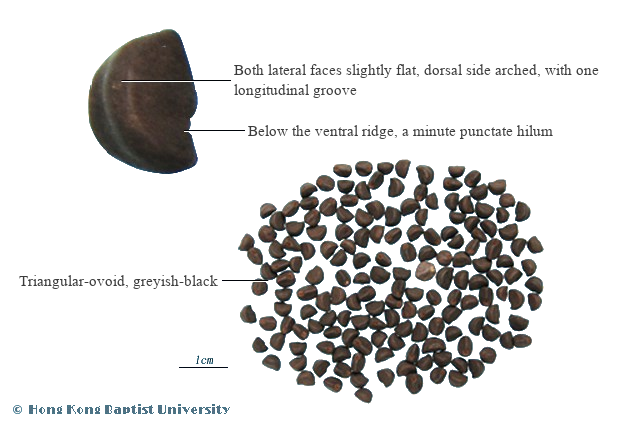
Qian Niu Zi (牵牛子, Semen Pharbitidis) is the dried ripe seed of Pharbitis nil (L.) Choisy or P. purpurea (L.) Voigt (Convolvulaceae), commonly known as morning glory — the familiar garden vine with trumpet-shaped flowers. Two colour varieties exist: black seeds (Hei Chou, 黑丑) and white seeds (Bai Chou, 白丑), used interchangeably though the black is considered slightly stronger. The name ‘leading the ox’ is said to derive from a legend in which a farmer was cured of severe oedema and, in gratitude, led his ox to thank the physician — a story that highlights the herb’s dramatic diuretic and purgative power. Qian Niu Zi is classified among the strong purgatives and diuretics (峻下逐水药): it is less violently toxic than Gan Sui, Yuan Hua, or Ba Dou, but still requires careful dosing and is contraindicated in weak or deficient patients. Its dual purgative-diuretic action makes it particularly suited for oedema and ascites with constipation, where it drains water through both the intestines and the kidneys simultaneously.
Actions & Therapeutic Effects
- Strongly purges and drains water — the primary action; treats severe constipation, oedema, and ascites through dual purgative and diuretic mechanisms.
- Drives out water and reduces oedema — drains generalised oedema and pleural or peritoneal effusion.
- Promotes urination — mild diuretic effect complementing the purgative action.
- Expels intestinal parasites — traditional use for roundworm and tapeworm expulsion.
- Breaks accumulations and disperses food stagnation — treats abdominal masses and food stagnation with constipation.
Clinical Applications in TCM
- Oedema, ascites, and pleural effusion — Qian Niu Zi combined with Xiao Hui Xiang and Mu Xiang
- Constipation with abdominal distension and water retention — used alone (crushed) or with Da Huang
- Ascites from liver cirrhosis — combined with Gan Sui and Yuan Hua in controlled, monitored protocols
- Intestinal parasitosis (roundworm, tapeworm) — Qian Niu Zi powder with Bing Lang
- Food stagnation with constipation — paired with Lai Fu Zi and Shen Qu
- Damp-Heat Lin syndrome with constipation — combined with Che Qian Zi and Zhi Zi
Precautions & Safety
- Dosage: 3–6 g in decoction; 1.5–3 g as powder; CRUSH before decocting (the hard seed coat prevents extraction)
- CONTRAINDICATED in pregnancy — strong downward-moving and water-draining action
- Contraindicated in Spleen-Stomach deficiency, Qi deficiency, or any deficiency pattern
- Contraindicated in patients with dehydration or electrolyte disturbances
- Do not combine with Ba Dou (巴豆) — synergistic toxicity and severe purgation risk
- Overdose symptoms: severe abdominal cramping, violent diarrhea, haematochezia, dehydration — MEDICAL EMERGENCY
- Not for prolonged use — limit to short courses for acute water-accumulation patterns
Classical TCM Formulas
- Qian Niu Wan (牵牛丸): Qian Niu Zi, Xiao Hui Xiang, Mu Xiang — drains water and moves Qi for generalised oedema and ascites. Source: Ru Men Shi Qin (Zhang Congzheng).
- Mu Xiang Bing Lang Wan (木香槟榔丸): Mu Xiang, Bing Lang, Qing Pi, Chen Pi, E Zhu, Huang Lian, Huang Bai, Da Huang, Xiang Fu, Qian Niu Zi — moves Qi, drains Heat, and purges accumulation. Source: Ru Men Shi Qin.
- Yi Zi Tang (一子汤): Qian Niu Zi as single herb for constipation with water retention.
Herb Combinations
- Qian Niu Zi + Xiao Hui Xiang (小茴香) + Mu Xiang (木香): the herbal trio — Qian Niu Zi drains, Xiao Hui Xiang moves Qi and warms, Mu Xiang regulates Qi. Source: Qian Niu Wan (Ru Men Shi Qin).
- Qian Niu Zi + Gan Sui (甘遂) + Yuan Hua (芫花) + Da Ji (大戟) + Da Zao (大枣): the classical ‘Ten Jujube’ hydragogue combination with Qian Niu Zi added for ascites. Source: Modified Shi Zao Tang.
- Qian Niu Zi + Bing Lang (槟榔): the anthelmintic pair — Qian Niu Zi paralyses parasites, Bing Lang expels them.
- Qian Niu Zi + Lai Fu Zi (莱菔子) + Shen Qu (神曲): drains food stagnation and constipation with abdominal distension.
Pharmacology & Research
Purgative: pharbitin (a resin glycoside) is the primary purgative principle; it irritates the intestinal mucosa, increasing peristalsis and fluid secretion, producing watery diarrhoea within 1–3 hours.
Diuretic: promotes sodium and water excretion through mild renal effects; some contribution from the osmotic effect of purgation-induced fluid shifts.
Anthelmintic: pharbitin and related resin glycosides paralyse intestinal parasites (Ascaris, Taenia), facilitating their expulsion; comparable to santonin in some studies.
Smooth muscle stimulant: resin glycosides stimulate gastrointestinal and uterine smooth muscle contraction.
Nephrotoxic (overdose): high doses may cause acute tubular necrosis — the basis for strict dosage limits.
Classical Descriptions
- 《名医别录》(Ming Yi Bie Lu, circa 500 CE): “牵牛子,味苦,寒,有毒。主下气,疗脚满水肿,除风毒,利小便。” (Qian Niu Zi: bitter, cold, toxic. Governs descending qi; treats leg fullness and water-swelling; eliminates wind-toxin; promotes urination.)
- 《本草纲目》(Bencao Gangmu, 1596) — Li Shizhen: “牵牛,治水气在肺,喘满肿胀,下焦郁遏,腰背胀重,及大肠风秘气秘,卓有殊功。” (Qian Niu: treats water-qi in the Lung with panting, fullness, and swelling; depression and obstruction in the Lower Jiao with lumbar and back distension and heaviness; and large intestine wind-constipation and qi-constipation — it has outstanding, special achievement.)
- 《本草备要》(Bencao Beiyao, 1694) — Wang Ang: “牵牛,苦寒有毒。泻气分湿热,逐水消肿,通大肠风秘,杀虫。” (Qian Niu: bitter-cold, toxic. Drains Damp-Heat from the Qi division; drives out water and reduces oedema; unblocks large intestine wind-constipation; kills parasites.)