
Sheng Jiang test
Key Takeaways
- Nature: Slight Warm | Taste: Acrid
- Category: Acrid and warm exterior-releasing
- Latin: Rhizoma Zingiberis Recens
Sheng Jiang (生姜) At a Glance
- Herb: Sheng Jiang
- Chinese name: 生姜 (Sheng Jiang)
- Latin name: Rhizoma Zingiberis Recens
- Nature: Slight Warm
- Taste: Acrid
- Meridian: Lung
- Category: Acrid and warm exterior-releasing
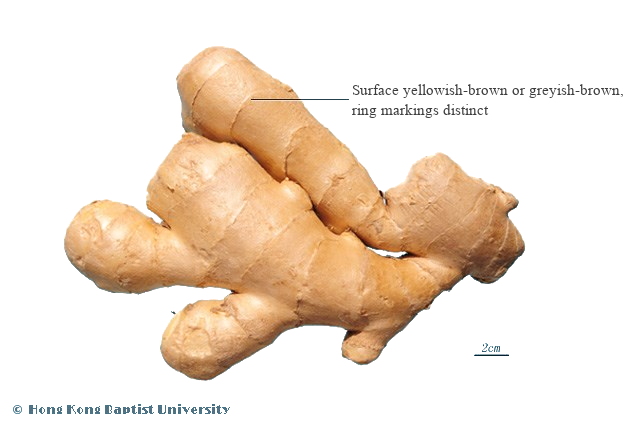
Sheng Jiang (生姜, Rhizoma Zingiberis Recens) is the fresh rhizome of Zingiber officinale Rosc. (Zingiberaceae), harvested in autumn and winter before the aerial parts wither. It is arguably the most ubiquitous culinary-medicinal substance in Chinese culture—used daily in cooking, prescribed in over half of all classical formulas, and deeply woven into folk medicine. Its acrid, warm character disperses exterior pathogens, warms the Middle Jiao to halt vomiting, transforms Phlegm, and mitigates the toxicity of other herbs (especially Ban Xia). Distinguished from Gan Jiang (dried ginger), which is hotter and more interior-acting, Sheng Jiang excels at releasing the exterior and harmonizing the Stomach.
Actions & Therapeutic Effects
- Releases the exterior and disperses Wind-Cold — primary action for early-stage Wind-Cold invasion with chills, fever, headache, nasal congestion, and a floating tight pulse.
- Warms the Middle Jiao and stops vomiting — the premier anti-emetic herb for Cold patterns, especially Cold-Damp Stomach upset, morning sickness, and vomiting following chemotherapy.
- Warms the Lung and transforms Phlegm — treats cough with profuse white sputum from Cold-Phlegm obstructing the Lung.
- Resolves toxicity and harmonizes herb interactions — reduces the harsh or toxic effects of Ban Xia, Nan Xing, and other acrid-toxic herbs; used in nearly every formula containing Ban Xia.
Clinical Applications in TCM
- Wind-Cold exterior syndrome — fresh Sheng Jiang decocted with brown sugar and Cong Bai for common cold
- Morning sickness of pregnancy — combined with Chen Pi and Zi Su Ye (Sheng Jiang Chen Pi Cha)
- Cold-Phlegm cough with watery white sputum — used with Chen Pi and Ban Xia (Er Chen Tang)
- Nausea from chemotherapy — fresh ginger slices steeped as tea, supported by clinical trials
- Cold-Stomach epigastric pain and acid reflux — paired with Gao Liang Jiang and Bai Dou Kou
- Postpartum abdominal pain from Cold stasis — combined with Yi Mu Cao and Hong Tang (brown sugar)
- Ginger-pressed juice applied topically for frostbite and alopecia (external use with caution)
Precautions & Safety
- Dosage: 3–10 g in decoction; 3–5 slices for tea; 10–30 g pressed for fresh juice
- Contraindicated in yin deficiency with internal heat, Lung heat cough, or excess Heat in the Stomach
- Avoid high doses during late pregnancy (excessive warmth may disturb the fetus)
- Avoid in patients with hemorrhagic disorders or those taking anticoagulants
- Do not consume ginger that has sprouted and begun to rot (produces safrole, potentially hepatotoxic)
Classical TCM Formulas
- Gui Zhi Tang (桂枝汤): Gui Zhi, Bai Shao, Sheng Jiang, Da Zao, Zhi Gan Cao — releases exterior Wind-Cold and harmonises Ying-Wei. Source: Shang Han Lun.
- Er Chen Tang (二陈汤): Ban Xia, Chen Pi, Fu Ling, Sheng Jiang, Wu Mei (or Zhi Gan Cao in modern form) — dries Dampness and transforms Phlegm. Source: Tai Ping Hui Min He Ji Ju Fang.
- Xiao Ban Xia Tang (小半夏汤): Ban Xia, Sheng Jiang — the foundational formula for vomiting, especially Phlegm-Fluid induced nausea. Source: Jin Gui Yao Lue.
- Sheng Jiang Xie Xin Tang (生姜泻心汤): Sheng Jiang, Gan Jiang, Huang Qin, Huang Lian, Ban Xia, Ren Shen, Zhi Gan Cao, Da Zao — harmonises the Middle, disperses water-heat accumulations, treats epigastric fullness with borborygmus and diarrhea. Source: Shang Han Lun.
Herb Combinations
- Sheng Jiang + Da Zao (大枣): the most famous harmonising pair in TCM — warms the Middle Jiao, nourishes and protects the Spleen-Stomach, regulates Ying and Wei. Source: Gui Zhi Tang (Shang Han Lun).
- Sheng Jiang + Ban Xia (半夏): ginger reduces Ban Xia toxicity while synergistically enhancing the antiemetic and Phlegm-transforming effect. Source: Xiao Ban Xia Tang (Jin Gui Yao Lue).
- Sheng Jiang + Zi Su Ye (紫苏叶) + Chen Pi (陈皮): releases exterior, harmonises Stomach, and stops morning sickness. Source: Sheng Jiang Chen Pi Cha.
- Sheng Jiang + Cong Bai (葱白) + brown sugar: classic folk remedy for early-stage Wind-Cold common cold. Source: Folk tradition (Sheng Jiang Hong Tang Shui).
- Sheng Jiang + Gao Liang Jiang (高良姜): warms the Middle, scatters Cold, and arrests epigastric pain. Source: Er Jiang Wan (Tai Ping Hui Min He Ji Ju Fang).
Pharmacology & Research
Gingerols and shogaols: the phenolic pungent principles responsible for antiemetic, anti-inflammatory, and thermogenic effects — 6-gingerol is the most studied constituent.
Antiemetic: acts centrally and peripherally; multiple RCTs confirm effectiveness against pregnancy-induced nausea, postoperative nausea, and chemotherapy-induced nausea (superior to placebo in most trials).
Anti-inflammatory and analgesic: inhibits COX-2 and LOX pathways; reduces prostaglandin synthesis comparable to non-selective NSAIDs without gastrointestinal erosion.
Gastroprotective: stimulates gastric mucosal prostaglandin production; enhances gastric emptying and protects against NSAID-induced ulceration.
Antiplatelet: gingerols inhibit thromboxane A2 formation; moderate antiplatelet effect — caution with warfarin and antiplatelet drugs.
Classical Descriptions
- 《神农本草经》(Shennong Bencao Jing, circa 200 CE): “生姜,味辛,温。主胸满,咳逆上气,温中止血,出汗,逐风湿痹,肠澼下利。生者尤良,久服去臭气,通神明。” (Sheng Jiang: acrid, warm. Governs chest fullness, cough with rebellious qi rising, warms the middle and arrests bleeding, promotes sweating, expels wind-damp Bi, treats dysentery with diarrhea. Fresh is especially effective; long-term use dispels foul odours and opens the spirit clarity.)
- 《本草纲目》(Bencao Gangmu, 1596) — Li Shizhen: “姜,辛而不荤,去邪辟恶,生啖熟食,醋、酱、糟、盐、蜜煎调和,无不宜之。可蔬可和,可果可药,其利博矣。” (Ginger: acrid but not offensive; dispels pathogenic factors and wards off malign influences. Taken raw or cooked, prepared with vinegar, paste, fermented rice, salt, or honey—there is no method that does not suit it. It can be a vegetable, a condiment, a fruit, or a medicine—its benefits are vast.)
- 《本草备要》(Bencao Beiyao, 1694) — Wang Ang: “生姜,辛温,行阳分而祛寒发表,宣肺气而散水气,温中止呕,化痰止嗽。” (Sheng Jiang: acrid-warm; moves in the yang domain to dispel Cold and release the exterior; disperses Lung qi and scatters water qi; warms the Middle to stop vomiting; transforms Phlegm and stops cough.)