
Xin Yi 辛夷 — Chinese Herbal Medicine
Key Takeaways
- Nature: Warm | Taste: Acrid
- Category: Acrid and warm exterior-releasing
- Latin: Flos Magnoliae
Xin Yi (辛夷) At a Glance
- Herb: Xin Yi
- Chinese name: 辛夷 (Xin Yi)
- Latin name: Flos Magnoliae
- Nature: Warm
- Taste: Acrid
- Meridian: Lung
- Category: Acrid and warm exterior-releasing
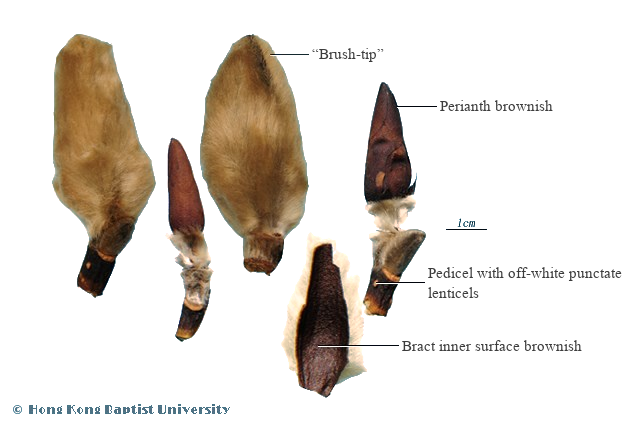
Xin Yi (辛夷, Flos Magnoliae) is the dried flower bud of Magnolia biondii Pamp., M. denudata Desr., M. sprengeri Pamp., or other Magnolia species (Magnoliaceae), harvested in late winter and early spring before the buds open. Its name — ‘acrid barbarian’ or more poetically ‘spring welcome’ — evokes the moment when the magnolia bud, like a brush tip dipped in acrid aromatic medicine, opens the nasal passages to welcome the breath. Xin Yi is the premier herb for nasal and sinus disorders in Chinese medicine: its light, ascending, aromatic quality specifically targets the nose and paranasal sinuses, dispelling Wind-Cold, opening the nasal orifices, and unblocking the Qi of the Lung’s upper portal. It is the sovereign herb in virtually every TCM formula for chronic rhinitis, allergic rhinitis, and sinusitis (Bi Yuan, 鼻渊). The hairs of the bud are slightly irritant to the throat and should be wrapped in cheesecloth when decocted (包煎).
Actions & Therapeutic Effects
- Disperses Wind-Cold and opens the nasal passages — the defining and most important action; treats nasal congestion, rhinorrhea, anosmia, and sinus headache from Wind-Cold.
- Unblocks the nasal orifices (通鼻窍) — the single most effective channel-specific herb for any pattern involving nasal obstruction, regardless of whether the root is Cold, Heat, or allergy.
- Dispels Wind-Cold and alleviates headache — treats frontal and supraorbital headache associated with sinus congestion and Wind-Cold invasion.
- As an envoy, guides formula action to the head and facial orifices — small doses guide other exterior-releasing herbs to the face and sinuses.
Clinical Applications in TCM
- Acute Wind-Cold rhinitis with nasal congestion, clear discharge, and headache — combined with Cang Er Zi, Bai Zhi, and Bo He (Cang Er Zi San)
- Chronic sinusitis (Bi Yuan) with thick yellow discharge — paired with Huang Qin, Jin Yin Hua, and Yu Xing Cao
- Allergic rhinitis (seasonal and perennial) — used with Fang Feng, Huang Qi, and Bai Zhu (Yu Ping Feng San + Xin Yi)
- Nasal polyps and hypertrophic rhinitis — combined with Cang Er Zi, E Zhu, and Dan Shen
- Post-viral anosmia (loss of smell) — Xin Yi alone as steam inhalation or decoction
- Tension headache with nasal congestion — paired with Bai Zhi and Chuan Xiong
- Pediatric adenoid hypertrophy — used with Jie Geng and Xia Ku Cao
Precautions & Safety
- Dosage: 3–10 g in decoction; wrap in cloth (包煎) — the fine hairs on the bud are irritant to the throat when swallowed
- Do not decoct for extended time — volatile oils responsible for the nasal-opening action dissipate quickly
- Contraindicated in Yin deficiency with Fire or Blood-Heat with dry nasal passages
- Caution in patients with hypertension — the ascending, dispersing action may theoretically affect Blood pressure
- Generally safe for short-term use; long-term monotherapy may disperse Qi excessively in deficient patients — combine with tonifying herbs in chronic conditions
- Xin Yi essential oil for steam inhalation (aromatherapy use) is effective for acute nasal congestion
Classical TCM Formulas
- Cang Er Zi San (苍耳子散): Cang Er Zi, Xin Yi, Bai Zhi, Bo He, Cong Bai, Xi Xin (modern: with tea as the vehicle) — disperses Wind, opens nasal orifices, and relieves pain for acute and chronic rhinosinusitis. Source: Ji Sheng Fang (Yan Yong He).
- Xin Yi San (辛夷散): Xin Yi, Bai Zhi, Sheng Ma, Gao Ben, Fang Feng, Chuan Xiong, Xi Xin, Mu Tong, Gan Cao — dispels Wind-Cold and opens nasal orifices for nasal congestion and sinus pain. Source: Ji Sheng Fang.
- Xin Yi Qing Fei Yin (辛夷清肺饮): Xin Yi, Shi Gao, Zhi Mu, Zhi Zi, Huang Qin, Pi Pa Ye, Sheng Ma, Bai He, Mai Men Dong, Gan Cao — clears Lung Heat and opens nasal passages for sinusitis with thick yellow discharge. Source: Yi Zong Jin Jian.
Herb Combinations
- Xin Yi + Cang Er Zi (苍耳子): the premier pair for nasal and sinus disorders — Xin Yi opens upward, Cang Er Zi disperses Wind-Damp and opens nasal orifices. Source: Cang Er Zi San (Ji Sheng Fang).
- Xin Yi + Bai Zhi (白芷) + Bo He (薄荷): Xin Yi and Bai Zhi open the nasal passages and relieve sinus headache; Bo He clears the sensation and enhances penetration to the head. Source: Cang Er Zi San.
- Xin Yi + Huang Qi (黄芪) + Fang Feng (防风) + Bai Zhu (白术): strengthens the defensive Qi and disperses Wind for chronic allergic rhinitis. Source: Yu Ping Feng San + Xin Yi.
- Xin Yi + Huang Qin (黄芩) + Jin Yin Hua (金银花): for chronic sinusitis with Heat signs — Xin Yi opens the passages while the cold herbs clear Heat. Source: Modern ENT combinations.
- Xin Yi + Shi Chang Pu (石菖蒲): dual orifice-opening action — Xin Yi opens the nasal orifice, Shi Chang Pu opens the sensory and cognitive orifices for anosmia and poor concentration from nasal congestion.
Pharmacology & Research
Nasal decongestant and anti-rhinitis: magnolin and fargesin demonstrate dose-dependent contraction of nasal mucosal blood vessels, reducing turbinate swelling within 15–30 minutes of administration.
Antihistamine and anti-allergic: inhibits mast cell degranulation and histamine release in models of type I hypersensitivity; clinically effective for seasonal allergic rhinitis comparable to loratadine in some studies.
Anti-inflammatory: magnolin inhibits NF-κB and reduces COX-2 expression in airway epithelial cells; reduces IL-4 and IL-5 in ovalbumin-sensitised allergic rhinitis models.
Antimicrobial: essential oil demonstrates moderate activity against Staphylococcus aureus, Streptococcus pneumoniae, and Haemophilus influenzae — the three most common upper respiratory pathogens.
Mucociliary clearance: enhances ciliary beat frequency in nasal epithelium, improving clearance of mucus and trapped pathogens.
Mild analgesic: volatile oil components produce peripheral analgesic activity in formalin and acetic acid writhing tests.
Classical Descriptions
- 《神农本草经》(Shennong Bencao Jing, circa 200 CE): “辛夷,味辛,温。主五脏身体寒热,风头脑痛,面皯。久服下气,轻身明目,增年耐老。” (Xin Yi: acrid, warm. Governs cold-heat conditions of the five zang organs and body, wind-induced headache and brain pain, and facial dark spots. Long-term use descends Qi, lightens the body, brightens the eyes, lengthens years, and resists ageing.)
- 《本草纲目》(Bencao Gangmu, 1596) — Li Shizhen: “辛夷之辛温,走气而入肺,能助胃中清阳上行通于天。所以能温中,治头面目鼻之病。” (Xin Yi’s acrid-warm nature moves in the Qi and enters the Lung; it can assist the clear Yang of the Stomach in ascending to communicate with heaven. Therefore it can warm the Middle and treat diseases of the head, face, eyes, and nose.)
- 《本草备要》(Bencao Beiyao, 1694) — Wang Ang: “辛夷,辛温轻浮,入肺胃气分。能助胃中清阳上行,通于头脑。治头痛、面皯、鼻渊、鼻塞、鼻疮。” (Xin Yi: acrid-warm, light and floating; enters the Qi division of Lung and Stomach. Can assist clear Stomach Yang in ascending upward to communicate with the brain. Treats headache, facial spots, deep-source nasal congestion [sinusitis], nasal obstruction, and nasal sores.)