
Zhu Ling 猪苓 — Chinese Herbal Medicine
Key Takeaways
- Nature: Neutral | Taste: Sweet, Bland
- Category: Treats eczema-sweet and bland/promotes diuresis
- Latin: Polyporus
Zhu Ling (猪苓) At a Glance
- Herb: Zhu Ling
- Chinese name: 猪苓 (Zhu Ling)
- Latin name: Polyporus
- Nature: Neutral
- Taste: Sweet, Bland
- Meridian: Kidney
- Category: Treats eczema-sweet and bland/promotes diuresis
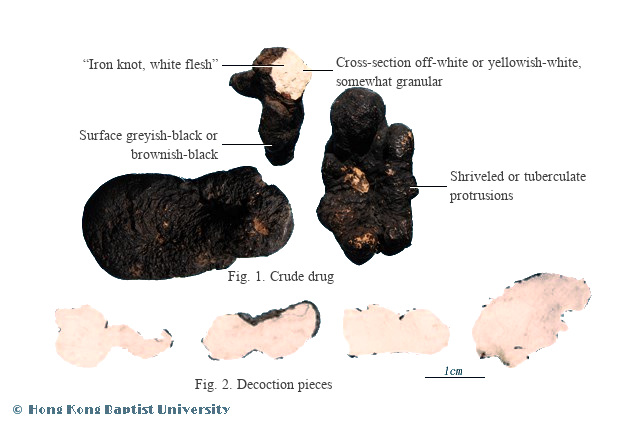
Zhu Ling (猪苓, Polyporus) is the dried sclerotium of Polyporus umbellatus (Pers.) Fries (Polyporaceae), a wood-rotting fungus that forms irregular, dark-coloured sclerotia (dense masses of mycelium) underground before sending up umbrella-like fruiting bodies from the roots of hardwood trees. Its name — ‘pig fungus’ — alludes to the dark pig-like appearance of the sclerotium and, some say, the wild boars that eagerly dig it up. Zhu Ling is the stronger, more purely diuretic counterpart to Fu Ling (Poria cocos): while Fu Ling drains Dampness while mildly tonifying the Spleen and calming the Heart, Zhu Ling drains Dampness with single-minded intensity and no tonifying action. It is the premier herb for Damp-Heat and water accumulation patterns requiring strong diuresis, particularly when Dampness is in the Lower Jiao. In modern integrative oncology, Zhu Ling polysaccharides (especially the β-glucan fraction) have emerged as an important biological response modifier, enhancing natural killer cell activity and improving outcomes in bladder, lung, and gastric cancers when used as an adjunct to conventional therapy.
Actions & Therapeutic Effects
- Promotes urination and percolates Dampness (利水渗湿) — the primary and strongest action; treats oedema, urinary difficulty, Lin syndrome, and Damp-Heat diarrhea.
- Drains Dampness without tonifying — unlike Fu Ling, Zhu Ling does not supplement the Spleen; its action is purely draining.
- Clears Damp-Heat from the Lower Jiao — especially urinary tract Damp-Heat with dark, scanty, or painful urination.
- Anti-tumor immunological enhancement — modern application for cancer immunotherapy via β-glucan polysaccharides stimulating NK cells and macrophages.
Clinical Applications in TCM
- Oedema and urinary difficulty from water-dampness accumulation — combined with Fu Ling, Ze Xie, and Bai Zhu (Si Ling San)
- Damp-Heat Lin syndrome (urinary tract infection) with burning urination — paired with Che Qian Zi, Hua Shi, and Zhi Zi
- Damp-Heat diarrhea with scanty urine — used with Fu Ling and Yi Yi Ren
- Jaundice from Damp-Heat — Zhu Ling San with E Jiao and Fu Ling for Yin jaundice
- Ascites from liver cirrhosis — combined with Ze Xie, Bai Zhu, and Da Fu Pi
- Adjunctive cancer immunotherapy — Zhu Ling polysaccharides used alongside chemotherapy for bladder, lung, and gastric cancers
- Nephrotic syndrome with proteinuria — Zhu Ling extract reduces proteinuria in some clinical studies
Precautions & Safety
- Dosage: 6–12 g in decoction
- Contraindicated in Yin deficiency with fluid depletion — the strong diuretic action may further deplete fluids
- Avoid in Spleen deficiency with chronic diarrhea without Dampness — the purely draining action may worsen deficiency
- Contraindicated in pregnancy without clear indication due to strong downward-draining action
- Overdose may cause electrolyte disturbance and dehydration — ensure adequate fluid intake
- Do not use in dehydrated patients or those with oliguria from renal failure (differentiate water-dampness oliguria from renal failure anuria)
Classical TCM Formulas
- Wu Ling San (五苓散): Zhu Ling, Fu Ling, Ze Xie, Bai Zhu, Gui Zhi — drains water and strengthens the Spleen for water-dampness accumulation with urinary difficulty. Source: Shang Han Lun.
- Si Ling San (四苓散): Zhu Ling, Fu Ling, Ze Xie, Bai Zhu — Wu Ling San minus Gui Zhi for water-dampness without exterior symptoms.
- Zhu Ling Tang (猪苓汤): Zhu Ling, Fu Ling, Ze Xie, E Jiao, Hua Shi — nourishes Yin, clears Heat, and drains water for Yin deficiency with water-heat. Source: Shang Han Lun.
- Zhu Ling San (猪苓散): Zhu Ling, Fu Ling, Bai Zhu — basic water-draining formula for simple edema. Source: Jin Gui Yao Lue.
Herb Combinations
- Zhu Ling + Fu Ling (茯苓) + Ze Xie (泽泻): the drainage triad — Zhu Ling drains strongly, Fu Ling drains while tonifying, Ze Xie drains Damp-Heat. Source: Wu Ling San / Si Ling San.
- Zhu Ling + Bai Zhu (白术) + Gui Zhi (桂枝): drains water while strengthening the Spleen and warming Yang for water-dampness with Spleen deficiency. Source: Wu Ling San (Shang Han Lun).
- Zhu Ling + Hua Shi (滑石) + Che Qian Zi (车前子): strongly drains Damp-Heat from the Lower Jiao for painful urinary dysfunction.
- Zhu Ling + E Jiao (阿胶) + Fu Ling (茯苓): nourishes Yin and drains water for Yin deficiency with water retention (a seemingly paradoxical combination). Source: Zhu Ling Tang (Shang Han Lun).
Pharmacology & Research
Diuretic: the polysaccharide fraction produces marked diuresis with increased sodium, potassium, and chloride excretion; mechanism involves enhanced renal blood flow and mild tubular effects.
Immunomodulatory and antitumor: β-glucan polysaccharides (especially the PSK-like polyporus polysaccharide, PPS) activate NK cells, macrophages, and cytotoxic T-lymphocytes; multiple clinical trials in Japan and China show improved survival and quality of life when used alongside chemotherapy for gastric, colorectal, and bladder cancer.
Hepatoprotective: reduces carbon tetrachloride-induced hepatic fibrosis via TGF-β1 pathway inhibition and stellate cell apoptosis.
Antimicrobial: polyporus extracts show activity against Escherichia coli, Staphylococcus aureus, and Trichophyton species.
Nephroprotective: reduces proteinuria and preserves glomerular filtration rate in experimental nephrotic syndrome models.
Classical Descriptions
- 《神农本草经》(Shennong Bencao Jing, circa 200 CE): “猪苓,味甘,平。主痎疟,解毒蛊疰不祥,利水道。久服轻身耐老。” (Zhu Ling: sweet, balanced. Governs intermittent malaria; resolves gu toxin and malign wasting; promotes water passage. Long-term use lightens the body and resists ageing.)
- 《本草纲目》(Bencao Gangmu, 1596) — Li Shizhen: “猪苓淡渗,利水之药也。凡水湿之证,皆可用之。较之茯苓,但无补益之功耳。” (Zhu Ling is bland and percolating — a water-draining medicinal. For all patterns of water-dampness, it may be used. Compared to Fu Ling, it merely lacks the tonifying function.)
- 《本草备要》(Bencao Beiyao, 1694) — Wang Ang: “猪苓,甘淡平。利水渗湿。入膀胱、肾经。功专利水,而无补性。” (Zhu Ling: sweet-bland, balanced. Promotes urination and percolates Dampness. Enters Bladder and Kidney channels. Its function specialises in draining water without tonifying nature.)