
Zi Hua Di Ding 紫花地丁 — Chinese Herbal Medicine
Key Takeaways
- Nature: Cold | Taste: Acrid, Bitter
- Category: Clearing heat and detoxifying
- Latin: Herba Violae (*Viola yedoensis* Makino)
Zi Hua Di Ding (紫花地丁) At a Glance
- Herb: Zi Hua Di Ding
- Chinese name: 紫花地丁 (Zi Hua Di Ding)
- Latin name: Herba Violae (*Viola yedoensis* Makino)
- Nature: Cold
- Taste: Acrid, Bitter
- Meridian: Heart
- Category: Clearing heat and detoxifying
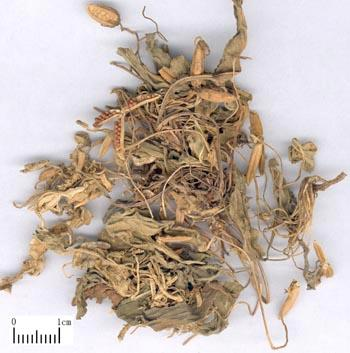
Zi Hua Di Ding, known botanically as *Viola yedoensis* Makino (family Violaceae), is the dried whole plant — roots, stems, leaves, and blossoms — harvested in spring and early summer while in flower. Its name is descriptive: 紫 (*zǐ*, purple), 花 (*huā*, flower), 地丁 (*dì dīng*, ground nail), evoking the slender taproot that drives into the earth like a nail and the delicate violet flowers that bloom close to the ground.
Classified among herbs that clear heat and resolve toxins (清热解毒药), Zi Hua Di Ding is one of Chinese medicine’s most reliable agents for hot, swollen, painful lesions of the skin and deeper tissues. Its cold nature directly quenches heat pathogens; its bitter flavour drains and dries; its acrid quality disperses accumulations and moves Blood to reduce swelling. The herb is equally effective taken as an internal decoction and applied topically as a fresh-plant poultice — a dual application strategy that has remained essentially unchanged since the Tang dynasty.
Actions & Therapeutic Effects
- Clears heat and resolves fire toxins (清热解毒)
- Cools the Blood and reduces toxic swelling (凉血消肿)
- Disperses nodules and alleviates pain
Clinical Applications in TCM
- Carbuncles, furuncles, and deep-rooted boils (疔疮痈肿)**
- Zi Hua Di Ding is the primary herb for 疔疮 (*dīng chuāng*) — the hard, deep-rooted, intensely painful carbuncle caused by heat toxin driving into the flesh. Applied topically as a crushed fresh poultice or taken internally, it is frequently paired with Jin Yin Hua (金银花), Pu Gong Ying (蒲公英), Ye Ju Hua (野菊花), and Tian Kui Zi (天葵子) in the classical formula **Wu Wei Xiao Du Yin (五味消毒饮)** for severe toxic infections with fever and spreading redness.
- Snake and insect bites (毒蛇咬伤)**
- Neutralises venom-induced heat toxicity both as an internal decoction and a topical wash, reducing local swelling, heat, and pain. Often combined with Ban Zhi Lian (半枝莲) for this purpose.
- Intestinal and lung abscesses (肠痈、肺痈)**
- Addresses internal heat-toxin accumulation with pus formation. Combined with Da Huang (大黄) and Mu Dan Pi (牡丹皮) for intestinal abscess; with Lu Gen (芦根) and Yu Xing Cao (鱼腥草) for lung abscess.
- Red, swollen, painful eyes (目赤肿痛)**
- When eye inflammation stems from ascendant Liver heat or exogenous heat toxins, the herb’s entry into the Heart channel helps drain pathogenic heat downward and relieve ocular congestion. Paired with Jue Ming Zi (决明子) and Huang Lian (黄连).
- Scrofula and lymphadenitis (瘰疬)**
- Clears toxic heat lodged in the lymphatics and softens nodular hardness caused by phlegm-heat accumulation. Combined with Xia Ku Cao (夏枯草) and Xuan Shen (玄参).
Precautions & Safety
- **Contraindicated in yin-type sores and carbuncles** — lesions that are pale, flat, non-warm, without thirst, and arising from cold or Qi/Blood deficiency. The cold nature will deepen such conditions.
- **Use with caution in Spleen-Stomach cold deficiency**: prolonged internal use of bitter-cold herbs may impair digestive function; modify by adding warm, harmonising herbs such as Chen Pi (陈皮) or Gan Jiang (干姜).
- **Pregnancy**: exercise clinical caution; cold, blood-moving herbs are generally used sparingly.
- **Not appropriate as a long-term standalone herb**: if constitutional deficiency underlies recurrent toxic lesions, combine with tonifying herbs or address root deficiency separately.
Classical TCM Formulas
- Wu Wei Xiao Du Yin (五味消毒饮): Jin Yin Hua, Ye Ju Hua, Pu Gong Ying, Zi Hua Di Ding, Tian Kui Zi — Heat-toxin furunculosis. Source: Yi Zong Jin Jian.
- Zi Hua Di Ding Gao (紫花地丁膏): crushed fresh herb as poultice — acute abscesses.
- Zi Hua Di Ding decoction: for acute UTI with Heat signs.
Herb Combinations
- Zi Hua Di Ding (紫花地丁) + Pu Gong Ying (蒲公英): the premier Heat-toxin-clearing pair — Pu Gong Ying targets mastitis and breast abscess; Zi Hua Di Ding targets furunculosis.
- Zi Hua Di Ding (紫花地丁) + Jin Yin Hua (金银花) + Ye Ju Hua (野菊花): the Wu Wei Xiao Du Yin core for carbuncles, furuncles, and erysipelas.
- Zi Hua Di Ding (紫花地丁) + Ban Bian Lian (半边莲): the topical snake-bite anti-venom pair (external wash).
Pharmacology & Research
Modern phytochemical and pharmacological investigation of *Viola yedoensis* and closely related Viola species has identified several classes of active constituents that correlate well with classical indications:
**Flavonoids** (violanthin, orientin, vitexin): Demonstrated anti-inflammatory activity via inhibition of COX-2 and downregulation of pro-inflammatory cytokines TNF-α and IL-6 in macrophage models — consistent with the herb’s role in reducing hot swelling.
**Cyclotides** (cyclic cystine-knot peptides): A structurally unique family of peptides found across Viola species, exhibiting broad-spectrum antimicrobial activity and cytotoxic properties in in vitro studies. Their membrane-disrupting mechanism of action may partly explain the classical use against deep bacterial infections resistant to gentler herbs.
**Alkaloids and saponins**: Contribute documented antimicrobial effects against *Staphylococcus aureus*, *Streptococcus* spp., and *Pseudomonas aeruginosa* — the predominant pathogens of the skin abscesses and carbuncles Zi Hua Di Ding classically treats.
**Polysaccharides**: Shown in animal models to enhance macrophage phagocytic activity, providing an immunomodulatory basis for the classical concept of “resolving toxins” by mobilising the body’s own defensive response.
**Antiviral constituents**: Preliminary in vitro studies indicate inhibitory activity against certain enveloped viruses, consistent with classical use for febrile, infectious presentations.
**Notes on clinical translation**: Topical preparations (poultices, washes) achieve high local concentrations of antimicrobial and anti-inflammatory compounds without significant systemic absorption. Internal decoctions are standard for systemic heat-toxin conditions. Large-scale randomised clinical trials remain limited; most human evidence derives from traditional clinical observation and smaller case series within Chinese hospital settings.
Classical Descriptions
- Bencao Gangmu (本草纲目, 1578) — Li Shizhen**
- Recorded Zi Hua Di Ding as capable of “解一切疔疮痈疽诸毒” — *resolving all varieties of deep carbuncles, abscesses, and toxins* — and recommended applying the freshly crushed plant directly to the lesion while also decocting it for internal use. Li noted its particular effectiveness against malignant toxic swellings that fail to respond to milder herbs.
- Wai Ke Zheng Zong (外科正宗, 1617) — Chen Shigong**
- This foundational surgical classic elevated Zi Hua Di Ding to canonical status by naming it one of the five core herbs in **Wu Wei Xiao Du Yin (五味消毒饮)**, the formula that became the standard treatment for hot suppurative carbuncles throughout the Qing dynasty and remains widely used today.
- Bencao Qiuzhen (本草求真, 1769) — Huang Gongxiu**
- Characterised the herb as entering the Heart channel to “清心解毒” — *clear Heart fire and resolve toxins* — explaining its power against malignant lesions through the principle that the Heart governs the Blood, and purging Heart fire prevents toxic heat from penetrating deeper into the nutritive and Blood levels.
- Ben Jing Feng Yuan (本经逢原, 1695) — Zhang Luyu**
- Noted that Zi Hua Di Ding, when used fresh and applied topically, acts more rapidly than when dried; advocated the simultaneous internal-external approach as the ideal clinical strategy for spreading carbuncles with systemic fever.